#sysadmin

See tagged statuses in the local BookWyrm community

Alors j'espère avoir trouvé une bonne parade pour éviter les robots spammeurs qui tentent de s'inscrire sur sans impact sur l'usager légitime.
Du coup je rouvre les inscriptions sans passer par l'invitation.

https://bw.heraut.eu/

I saw this post and it motivated me to do a quick test:
https://phanpy.social/#/hachyderm.io/s/115891592999188880

Stop opening huge files in screen editors.

Screen editors (nvi, vim, etc.) assume you want to scroll,
see context, and move a cursor interactively.
Huge files break those assumptions.

For large files (1GB+):

  • Inspect: head, tail, grep
  • Understand structure: awk, sed -n (stream, don’t load)
  • Surgical changes: ed or sed

Open a screen editor only when you need to rewrite text.

Benchmark (1GB text file):

  • nvi -> 20.1s (eager line indexing ~25M lines)
  • vim -> 7.7s (lazy loading, deferred UI cost)
  • ed -> 4.0s (I/O-bound buffering, no TUI overhead)

Large files don’t need better editors.
They need better workflows.

For huge files, the right solution is not tuning screen editors,
but using the right tools:

  • shell tools for inspection
  • ed for known, surgical changes
  • screen editors when interactive rewriting is actually …

I saw this post and it motivated me to do a quick test:
https://phanpy.social/#/hachyderm.io/s/115891592999188880

Stop opening huge files in screen editors.

Screen editors (nvi, vim, etc.) assume you want to scroll,
see context, and move a cursor interactively.
Huge files break those assumptions.

For large files (1GB+):

  • Inspect: head, tail, grep
  • Understand structure: awk, sed -n (stream, don’t load)
  • Surgical changes: ed or sed

Open a screen editor only when you need to rewrite text.

Benchmark (1GB text file):
nvi - 20.1s (eager line indexing ~25M lines)
vim - 7.7s (lazy loading, deferred UI cost)
ed - 4.0s (I/O-bound buffering, no TUI overhead)

Large files don’t need better editors.
They need better workflows.

For huge files, the right solution is not tuning nvi,
but using the right tools:
shell for inspection, ed for known changes,
and nvi when interactive rewriting is actually needed.

PS:
nvi chooses predictability over …

A few days ago, a client’s data center "vanished" overnight. My monitoring showed that all devices were unreachable. Not even the ISP routers responded, so I assumed a sudden connectivity drop. The strange part? Not even via 4G.

I then suspected a power failure, but the UPS should have sent an alert.

The office was closed for the holidays, but I contacted the IT manager anyway. He was home sick with a serious family issue, but he got moving.

To make a long story short: the company deals in gold and precious metals. They have an underground bunker with two-meter thick walls. They were targeted by a professional gang. They used a tactic seen in similar hits: they identify the main power line, tamper with it at night, and send a massive voltage spike through it.

The goal is to fry all alarm and surveillance systems. …

Every time I cancel a bloated SaaS subscription and replace it with a lightweight, open-source tool or a 50-line script I wrote myself, I feel my soul heal a little bit.

We over-complicate our workflows because we've been sold the idea that professional means expensive. Usually, it just means vendor lock-in.

Bonus points to you if this means moving away from Big Tech,

AI models don’t really 'get' the BSDs. As a result, they often provide incomplete, imprecise, or flat-out wrong answers by defaulting to Linux paradigms. When it comes to illumos-based systems, they just completely lose the plot.

This is becoming a serious issue for the BSDs and illumos ecosystems. We are seeing entire websites flooded with AI-generated tutorials and guides that are totally incorrect. Most people don't realize this; they follow the instructions, fail, and then assume that the BSDs doesn't work well or are 'unstable' because they have supposedly changed since the guide was written.

Luckily, some people eventually find my blog, reach out, and finally understand what's actually going on. Others, unfortunately, end up on major social sites or comments, claiming that these systems are broken.

In 2026, one of our greatest challenges will be teaching people how to vet their sources and filter information.
And …

@mwl@io.mwl.io’s post made me revisit RCS in a very small role: a safety net for individual files.
Paired with nvi, a tiny wrapper lets me snapshot configs before risky edits. Simple, local, no magic.

Example wrapper I’m using:

#!/bin/sh
#
# safeedit — RCS-backed safe editing with nvi
#

set -e

if [ $# -ne 1 ]; then
echo "usage: safeedit <file>" >&2
exit 1
fi

FILE="$1"

if [ ! -f "$FILE" ]; then
echo "safeedit: file not found: $FILE" >&2
exit 1
fi

DIR=$(dirname "$FILE")
BASE=$(basename "$FILE")
RCS_DIR="$DIR/RCS"
RCS_FILE="$RCS_DIR/$BASE,v"

mkdir -p "$RCS_DIR"
chmod 700 "$RCS_DIR"

if [ ! -f "$RCS_FILE" ]; then
ci -l "$FILE"
else
ci -u "$FILE" || true
co -l "$FILE"
fi

exec nvi "$FILE"

nvi protects the session; RCS protects the decision.

Original post by https://io.mwl.io/mwl/115814245521209100


@

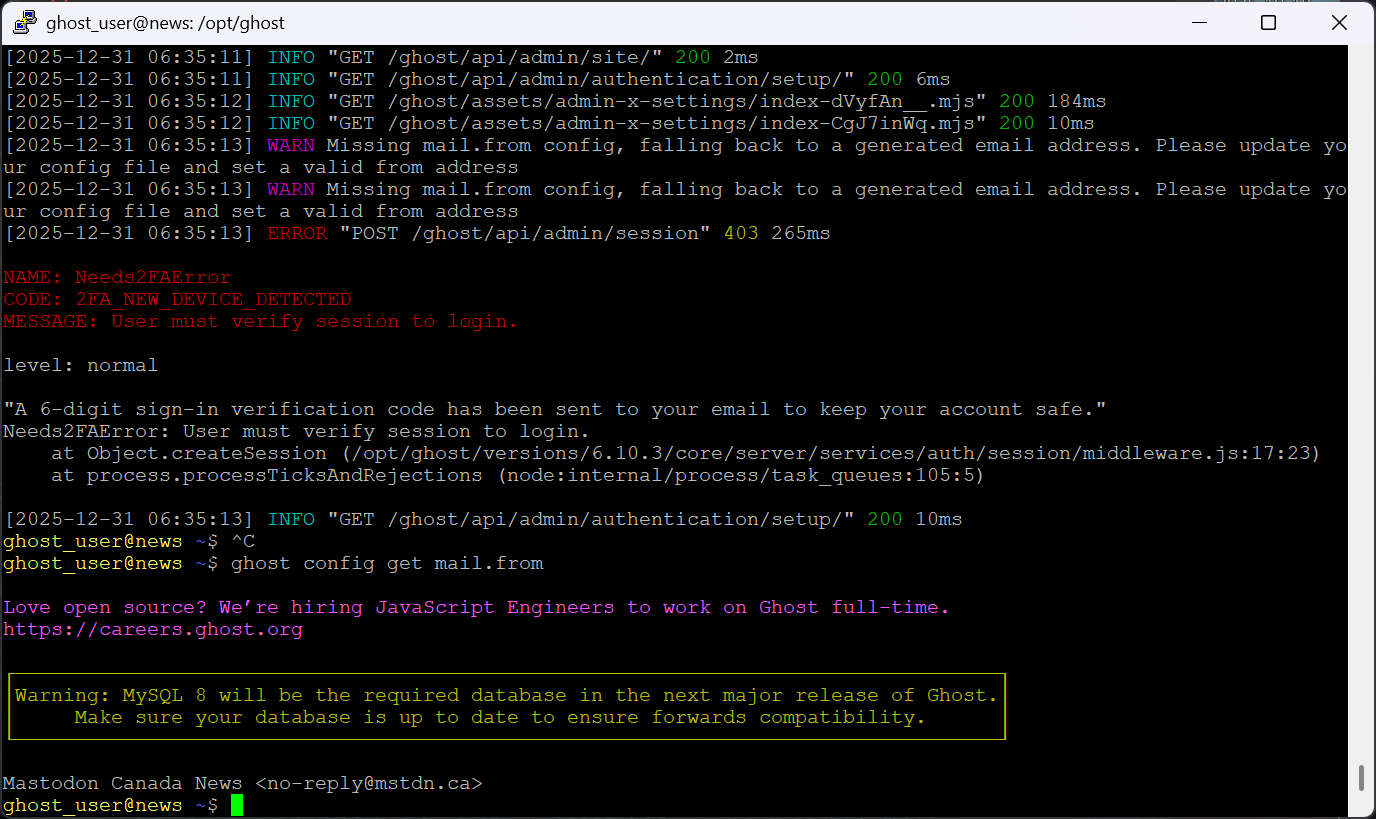
Absolutely pulled my hair out with Ghost (what hosts news.mstdn.ca).

For some reason, even if I setup Mailgun credentials to send email, including a from address, it complains the from address is missing.

Mailgun credentials are verified to be correct.

Sometimes, the mail.transport variable will reset from my specified SMTP to Direct for seemingly no reason.

I thought I might be able to start from scratch with a back up but nooo, I can't pull a backup because the server doesn't have a valid SSL cert because it's behind a Cloudflare tunnel.

As it turns out, there was somehow two Ghost instances running?? One on port 2368 and one on port 2370?? What was Turnkey Linux doing?!

Anyway, I was able to get a staff access token and finally pull a backup. I'll be redeploying it to a new BASIC Ubuntu container but first, …

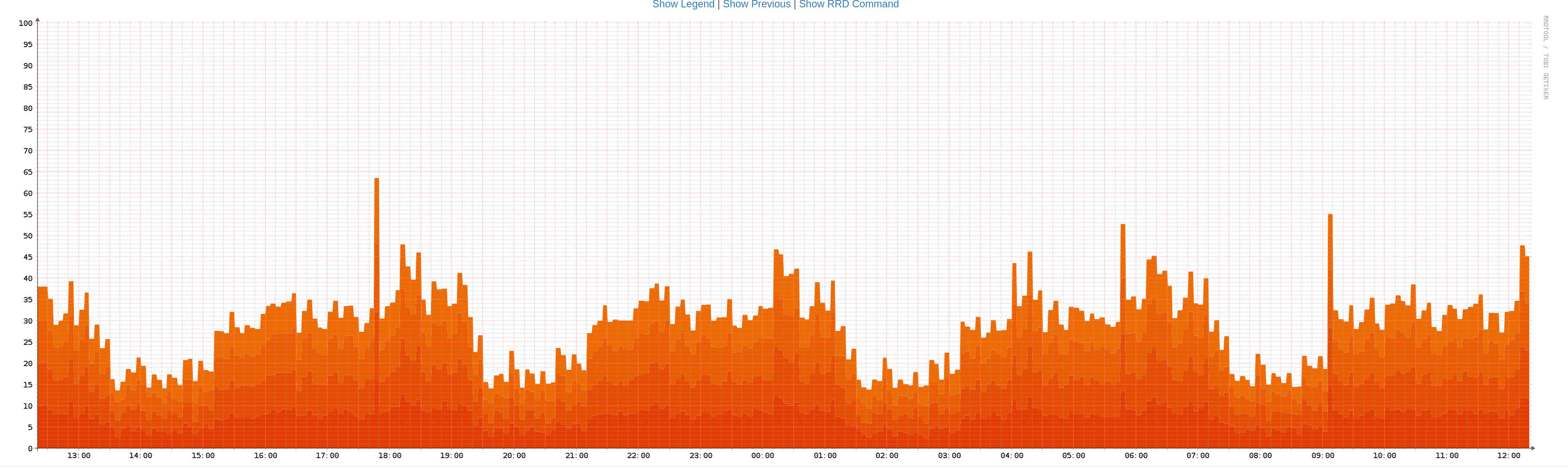
Here is the CPU usage graph for the last 24 hours of the FediMeteo VM. A full 24 hours, during which a huge number of people are connecting, helped by the traction gained from being among the top stories on Hacker News and Lobsters, as well as the many shares across the Fediverse.

RAM usage? Active, around 450 MB. Then there is cache, ARC, and so on. But in practice, zero swap in use after days of uptime.

39 jails running, 39 snac instances, nginx serving the homepage, and HAProxy. HAProxy caching enabled. ZFS snapshots every 15 minutes, backups via zfs send and receive every hour. The same hourly schedule applies to the recalculation of cities, countries, and followers for the homepage.

All of this on a 4 euro per month FreeBSD VM.

If anyone has doubts about the quality and efficiency of FreeBSD, this is …

I'm over 45 years old, live near in France, a dad of 2 kids, one with syndrome.
I'm thirsty for knowledge, passionate about science and technology in all disciplines.
I try to take photos 🤣.
Aware that infinite growth isn't compatible with a finite world.
First contact with computing in the 80s: Logo on TO7…
I've been working as a , for over 20 years 👴.

RE: https://mastodon.social/@jessie/115774314854244968

I notice that the British Library is also hiring a Server Specialist (), UK only, to recover from their 2023 cyber attack.

https://ce0752li.webitrent.com/ce0752li_webrecruitment/wrd/run/etrec179gf.open?WVID=5071482BMD&LANG=USA&VACANCY_ID=8062619t4R

This posting is up in Boston Spa; that's not that Boston, not /that/ Boston, keep going.... yep that one.

It's interesting to see them trying to hiring and skills to try and harden their systems. Wonder if it will work.