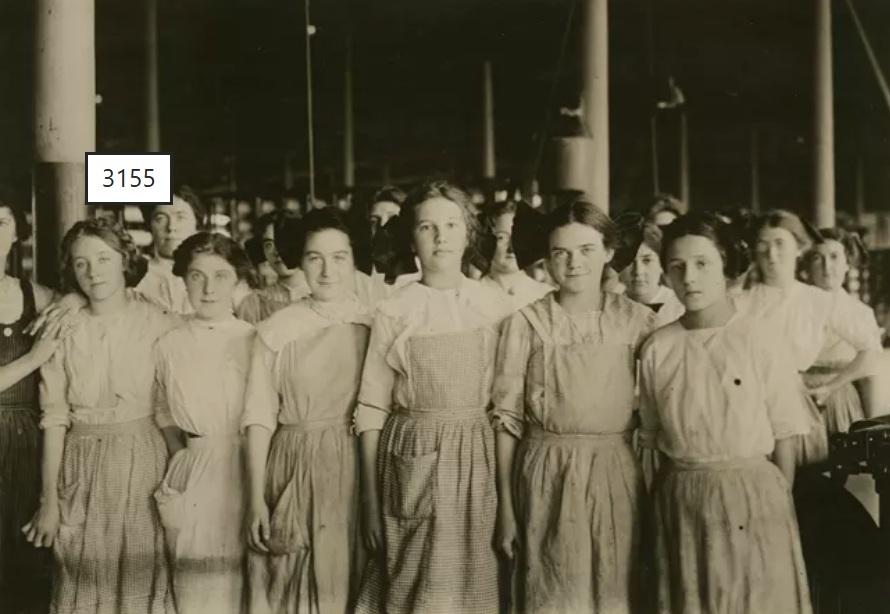
Today in Labor History December 20, 1790: The first American cotton mill began operation in Pawtucket, Rhode Island. The mill, owned by Samuel Slater, employed children aged 4-10. He also hired entire families, forcing them to live in his company housing and buy all their living necessities from his company store. Ann Arnold, aged 9, was Slater’s first employee. In 1810, he introduced the power loom, which was too much for young children to handle. So, he started hiring the next cheapest labor: young women. By 1835, 55% of all millworkers in the U.S. were children. In the New England mills, the children worked 12-hour days, 6 days per week in the winter. In the summer, they were forced to work 16 hours per day. On Sundays, he forced them to attend his Sunday school, where he indoctrinated them in “Christian values” like hard work and subservience to one’s masters. The children spent twice as many hours in the mill than kids spend in the classroom today. Kids were fined for not working hard enough. But they resisted the abuse whenever they could, sabotaging the factory, setting fires, and stealing property. In 1814, the mill owners petitioned the state to organize a police force to subdue the increasingly rebellious child workforce. 30 years later, on May 26, 1824, 102 young women and children at Slater’s mill initiated the first factory strike on U.S. soil. They, along with sympathetic community members, blockaded access to Slaters mill, shutting down operations and inspiring workers at other nearby mills to join their strike. They also went to the homes of the mill owners, shouting insults and breaking their windows. In early June, the mill owners and the workers came to an agreement, the details of which have been lost to history, and the workers returned to the mills.
Congress tried several times to enact child labor laws in the early 20th century, eventually passing the Fair Labor Standards Act of 1938, which prevented bosses from employing children during school hours, and in dangerous tasks. This law, and some of the earlier attempts, came in the wake of active organizing to protect children, including Mother Jones’s famous March of the Mill Children, in 1903, when she led a contingent of children and supporters from Philadelphia to President Teddy Roosevelt’s summer home, on Long Island, to “ask him to recommend the passage of a bill by congress to protect children against the greed of the manufacturer. We want him to hear the wail of the children, who never have a chance to go to school, but work from ten to eleven hours a day in the textile mills of Philadelphia, weaving the carpets that he and you walk on, and the curtains and clothes of the people.”
Another important contribution to the movement to end child labor came from photograph Lewis Hine, who published a series of photographs of children doing dangerous work in coal mines, glass works, and textile mills. I used his powerful photograph of colliery Breaker Boys for the cover of my first novel, Anywhere But Schuylkill. My protagonist, Mike Doyle, started work in the colliery at age 13. If interested, please send me $25 via Venmo (@Michael-Dunn-565), along with your mailing address, and I will send you a signed copy!
The U.S. never actually protected all children from exploitation. For example, the child labor laws always had exemptions for agricultural labor. And bosses often violated the existing laws, without consequence, including today. Meanwhile, growing numbers of states have passed new laws over the past five years that make it easier for bosses to exploit children and employ them in dangerous jobs.
#workingclass #LaborHistory #children #childlabor #mill #exploitation #cotton #childexploitation #childabuse #lewishine #motherjones #strike #union #books #fiction #novel #writer @bookstadon