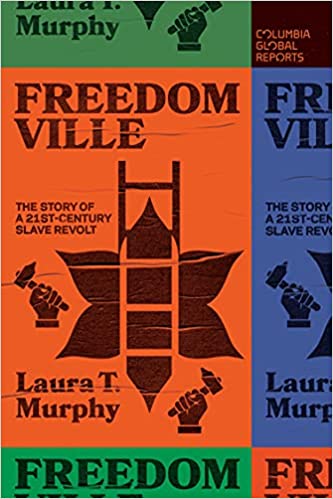

mikerickson reviewed Freedomville by Laura T. Murphy
-
3 stars
Sometimes I delude myself into thinking that I'm well-informed about the world around me, and then I stumble across a story about a true event that happened during my lifetime that I can't believe I've never heard of. This book, which reads like an extended journalistic deep dive, served as my exercise in humility today.
Slavery is one of those things that we like to pretend rests firmly in the past but we all secretly know is still going on. In India, with their caste system being what it is, it doesn't look the same as the transatlantic slave trade did with mass forced migration and metal chains. Instead it's more like a series of impossible debts that can never be paid off, and an understanding that a lower-caste individual will physically labor for a higher-caste person for the rest of their below average lifespan. Culturally, people in this …
Sometimes I delude myself into thinking that I'm well-informed about the world around me, and then I stumble across a story about a true event that happened during my lifetime that I can't believe I've never heard of. This book, which reads like an extended journalistic deep dive, served as my exercise in humility today.
Slavery is one of those things that we like to pretend rests firmly in the past but we all secretly know is still going on. In India, with their caste system being what it is, it doesn't look the same as the transatlantic slave trade did with mass forced migration and metal chains. Instead it's more like a series of impossible debts that can never be paid off, and an understanding that a lower-caste individual will physically labor for a higher-caste person for the rest of their below average lifespan. Culturally, people in this situation might not even recognize this as slavery the way Westerners do, which presents a further challenge to NGOs trying to combat this.
In 2000, an entire village of slaves in Sonbarsa, Uttar Pradesh rose up in a "peaceful revolution" to overthrow their landlords without violence and renamed the place Azad Nagar or "Freedomville". It was held up as a template for similar communities in different parts of the world, and after years of teaching about it to her students the author decided to visit and meet these revolutionaries in person 15 years after their victory. Instead, she was met with an animated crowd of old timers that basically said, "no, we killed those sons of bitches, and we're proud of it."
Tonally, there's a bit of odd pearl-clutching that follows that initially reads like, "How could these slaves be so violent towards their masters?", but later morphs into a more appropriate, "How did the true story get twisted into this sanitized version?" The villagers of Freedomville don't seem to be economically better off today, but ironically their former masters are also struggling as the landlord caste has all been muscled out of their traditional lands by multinational corporations with more powerful machinery. Apparently the cure for slavery is to make it uneconomical with new technology that's cheaper than human labor. Kinda feels like no one came out on top in this case though.