nopewhat reviewed The Magus by John Fowles
None
Daat: Knowledge - The Hidden Sphere | Element: Water | Speculative fiction, liminal spaces, mythic structures
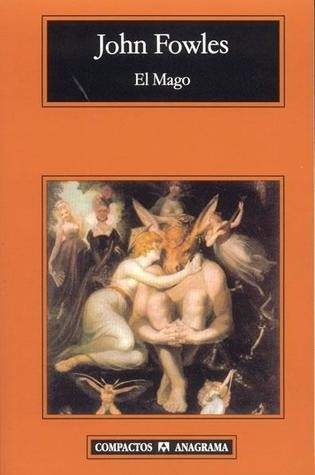
Paperback, 570 pages
Spanish language
Published Oct. 4, 2002 by Anagrama.
A startlingly original novel about a young English graduate who takes a position as a teacher at a private school on a small Greek island. Bored and lonely he spends his free hours wandering alone until he meets a wealthy and mysterious neighbour. Soon he finds himself a victim of this man’s increasingly bizarre psychological games and obsessed with a young woman who may or may not be a willing participant in these games.
Daat: Knowledge - The Hidden Sphere | Element: Water | Speculative fiction, liminal spaces, mythic structures
At some level the confusion and lies are overwhelming. It definitely doesn't help that the main character is an entitled unrepentant jerk.
At some level the confusion and lies are overwhelming. It definitely doesn't help that the main character is an entitled unrepentant jerk.
It's very hard to rate this book.
This damn book. It took me forever to read this. There were times I loved it. There were times I hated it and thought "who cares". There were times I thought it was profound. There were times I thought it was boring and meaningless. After finishing it I still feel all those things. I still wonder what was the message? What was the point? Why do this terrible thing to this unremarkable young man? Why single him out? Why why why?
And yet, there is something that nags at the back of your mind... almost like you yourself have been hypnotized or a victim of the masque. All the world's indeed a stage and we are merely players I guess. We are sometimes playing the star role, sometimes a bit part in someone else's saga. Sometimes we merely observe from a distance. Some …
It's very hard to rate this book.
This damn book. It took me forever to read this. There were times I loved it. There were times I hated it and thought "who cares". There were times I thought it was profound. There were times I thought it was boring and meaningless. After finishing it I still feel all those things. I still wonder what was the message? What was the point? Why do this terrible thing to this unremarkable young man? Why single him out? Why why why?
And yet, there is something that nags at the back of your mind... almost like you yourself have been hypnotized or a victim of the masque. All the world's indeed a stage and we are merely players I guess. We are sometimes playing the star role, sometimes a bit part in someone else's saga. Sometimes we merely observe from a distance. Some of the time we are oblivious. Sometimes we feel like a puppet controlled by unseen forces. Sometimes it feels like there is a deeper meaning and purpose, sometimes it seems random or coincidental.
IDK this one is a slow burner. Not for the faint of heart. Not because it is difficult reading. But mostly because it is either deeply philosophical, a microcosm of what it means to be human, or it's empty, just a bunch of words on the page that goes on and on and on. Preposterous or profound? You decide.
While I don't agree with all of Fowles choices here, I kind of loved being wrong-footed for most of the novel.
While I don't agree with all of Fowles choices here, I kind of loved being wrong-footed for most of the novel.
Really enjoyed this. I don't know if I'm convinced by the ending though. I kind of like it when you're told the full story. Leaving it up to the reader seems sort of weak...
In my mind they got together and sorted their shit out.
I am quite sad to lose Conchis and Julie so far from the end. I expected them to come back, but oh well...
Enjoyable most of the time, but a bit frustrating with the constant lies and second-guessing everything.
Really enjoyed this. I don't know if I'm convinced by the ending though. I kind of like it when you're told the full story. Leaving it up to the reader seems sort of weak...
In my mind they got together and sorted their shit out.
I am quite sad to lose Conchis and Julie so far from the end. I expected them to come back, but oh well...
Enjoyable most of the time, but a bit frustrating with the constant lies and second-guessing everything.
Last night was a slightly late one for me, since I needed to finally finish my second reading of The Magus, by John Fowles. It really is a fascinating read about a very unusual social experiment and its subject, Nicholas Urfe. There are more twists and turns in this novel's plot than any other I've ever read.
One thought I did not have the first time through was how much of this experiment was voluntary. Just as in the real-life obedience experiments which were carried out by Stanley Milgram in the 1950's, Nicholas becomes so attached to this experiment that he never even thinks about quitting, no matter how troublesome, or even traumatic, things get.
We are visiting a few other people to discuss this book this weekend, and I have no idea where the conversation will start or end, since there is so much to talk about.
Some ideas--
…
Last night was a slightly late one for me, since I needed to finally finish my second reading of The Magus, by John Fowles. It really is a fascinating read about a very unusual social experiment and its subject, Nicholas Urfe. There are more twists and turns in this novel's plot than any other I've ever read.
One thought I did not have the first time through was how much of this experiment was voluntary. Just as in the real-life obedience experiments which were carried out by Stanley Milgram in the 1950's, Nicholas becomes so attached to this experiment that he never even thinks about quitting, no matter how troublesome, or even traumatic, things get.
We are visiting a few other people to discuss this book this weekend, and I have no idea where the conversation will start or end, since there is so much to talk about.
Some ideas--
The ethics of the experiment, who were the conspirators, what was the motivation behind it, how were certain effects accomplished?
And of course, the ending. Both times, I found the ending unsatisfying, but this time, it's more obvious that the end of the book is not the end of the story, nor is it the point--it's the mental journey and transformation of Nicholas Urfe.
~~~~~~~~~~~~~~~~~~~~~~~~~~~~~~~~~~~~~
This is from Amazon:
A novel which explores the complexities of the human mind. On a remote Greek island, Nicholas Urfe finds himself embroiled in the deceptions of a master trickster. Surreal threads weave ever tighter as reality and illusion intertwine in a bizarre psychological game.
Oh, but this is the most brief summary I've ever seen, if you can call it that. It's more like a precis. I lifted it off a link that I got from John Fowles's web page:
An Englishman takes a job at a private school on a Greek island. Local millionaire stages elaborate, almost hallucinogenic, mind games.
```````````````
Now, that's vague. This Englishman is Nicholas Urfe, and he's been involved with a young woman named Alison, from whom he has just heartlessly semi-broken-up with. In other words, he's stringing her along, just in case he doesn't find anything else out there on the fictional island of Phraxos. Meanwhile, she takes a job as a stewardess, and though she meets lots of people, she remains in love with Nicholas. While Alison is suffering from heartache, however, Nicholas meets a fascinating older gentleman who lives on the island named Maurice Conchis, and becomes involved in a sort of mind altering experiment. Conchis is able to observe much about Nicholas, particularly his treatment of Alison during a weekend visit. It is the way Nicholas views and treats others, especially women, and his selfishness that excite the interest of Conchis, and he and his co-conspirators are able to give Nicholas a real mind-lashing.
This novel was chosen for our small reading discussion group--
I was afraid that no one else in the group would like it at all, but the discussion was actually a very interesting one, even though I'm sure we're very split about our overall opinions.
We all agreed that what Conchis did was completely unethical, and also that the ending was unsatisfying. We talked a little bit about all the historical and literary allusions in the book. The Tempest was alluded to very often, for instance. Also, there is a nod to Great Expectations, which Fowles expanded only after a student of his pointed it out to him.
No one could fathom how Conchis achieved all these illusions--maybe he really was Prospero. And there was general agreement that it seemed most unusual for a man to go to so much expense and trouble for one subject, at a time--there were others before Nicholas. We all wondered if the previous subject had been drawn into Monkhood because of what had happened to him, and there are many other small mysteries. What was true, what was lie?
The conundrum was that even though Nicholas was able to affect the events of the experiment, he was never in control of the events. It was free will verses hazard. Or was it? At one point, Conchis does hypnotize Nicholas. Has there been a post-hypnotic suggestion?
And, of course, the big question is, what does the ending mean? Yes, it's in Latin, but even after looking up the translation, it can be interpreted in different ways.
Overall, in this group of three women and four men, I'd say that four people definitely liked it, and the others were ambivalent about it. The hostess said, "I don't hate it." I find that admirably vague.
Retelling of "The Tempest" in which the Prospero-figure (Conchis) kidnaps a young English teacher (Nicholas) and psychologically tortures him for weeks (I think). Nicholas is a smug and unpleasant character, which makes you wonder if someone who tortures a nasty person is good or bad? When I was a kid I wondered if the Devil was good because he tortured bad people, and maybe JF had the same idea.
There is also a gripping tale of wartime atrocities in Greece that has been published as a standalone story and thereby hangs an issue with the book. Because outside this separate tale The Magus as a whole is absolute guff. It is full of pretentiousness and hints and allegations and black men in masks and alluring twins and a lot of Sadeian crap, but Sade was a rebel against the crapness of 1970s popular music, er, the French aristocracy and its …
Retelling of "The Tempest" in which the Prospero-figure (Conchis) kidnaps a young English teacher (Nicholas) and psychologically tortures him for weeks (I think). Nicholas is a smug and unpleasant character, which makes you wonder if someone who tortures a nasty person is good or bad? When I was a kid I wondered if the Devil was good because he tortured bad people, and maybe JF had the same idea.
There is also a gripping tale of wartime atrocities in Greece that has been published as a standalone story and thereby hangs an issue with the book. Because outside this separate tale The Magus as a whole is absolute guff. It is full of pretentiousness and hints and allegations and black men in masks and alluring twins and a lot of Sadeian crap, but Sade was a rebel against the crapness of 1970s popular music, er, the French aristocracy and its corrupting power and Conchis, the Magus of the title, isn't. On and on and on and on it goes. JF even wrote a director's cut version which is even more tedious. Why oh why?
A short and gritty tale of wartime atrocities in Greece, embedded in a quarter of a million words of look-how-clever-I-am up-its-own-arseness.
John Fowles could certainly write, but his tendency to root not so much for the underdog as for the unpleasant barely-grown-up public schoolboy is not very appealing. Nicholas Urfe is one of the more spectacularly unpleasant fictional creations of the postwar years without actually being a psychopathic sadist - an expression you find in this novel, unfortunately not to describe its hero, and which I have long treasured. 'The Magus' is a portrait of Greece at a time when it was starting to heal the wounds of the Second World War and the succeeding civil war, and opening itself up to foreigners as well. Given that even in the mid 1980s it was closer to a Middle Eastern country than Europe (all that's changed now, very much; it's much …
A short and gritty tale of wartime atrocities in Greece, embedded in a quarter of a million words of look-how-clever-I-am up-its-own-arseness.
John Fowles could certainly write, but his tendency to root not so much for the underdog as for the unpleasant barely-grown-up public schoolboy is not very appealing. Nicholas Urfe is one of the more spectacularly unpleasant fictional creations of the postwar years without actually being a psychopathic sadist - an expression you find in this novel, unfortunately not to describe its hero, and which I have long treasured. 'The Magus' is a portrait of Greece at a time when it was starting to heal the wounds of the Second World War and the succeeding civil war, and opening itself up to foreigners as well. Given that even in the mid 1980s it was closer to a Middle Eastern country than Europe (all that's changed now, very much; it's much like Italy or Spain), in the 1950s it must have been truly alien for the well-educated Englishman Fowles, who found much to like there and nothing to like in his own country or people - which isn't very endearing and, well, reverse bigotry is still bigotry.
The trouble with the portrayal of Greece in the '50s is that it has Nicholas Urfe in it. In the manner of the present day I would like to imagine a fight between him and Nathan Barley - a race to the bottom. Urfe meets the enigmatic Greek who calls himself Moris Conchis (though alert, do you really think he is the real ex-Mayor of a village who had to make a decision one day during the Nazi Occupation? Given the shifting masks and identities throughout the novel, I suspect not. Although the final joke would be if he really were). Conchis and his friends give Nicholas a good and overdue psychological kicking, and the tragedy of Nicholas is that he goes home and doesn't seem to have learned anything. Alternatively you could say he's a young man on his own in a strange country and a powerful local bullies the heck out of him for his own amusement. Although given Urfe's persona, I wouldn't.
At times I wondered if we were completely misinterpreting the book, rather the way David Allen Coe won't reprise his notorious song "N*r F**r" because people think he's actually racist rather than making fun of racists. But then I decided that no, we haven't misinterpreted it. Whether or not "The Magus" is a gender-flipped "The Collector" (which it may as well be), it's sufficiently admired by people who should know better that any previous authorial intention is kind of irrelevant.
Two of my friends are still (in their middle years) obsessed with this book. They also, if you are unwise enough to bring them together, are obsessed with sex and go on about it until they manage to achieve the difficult feat of making sex a boring subject.
I suspect The Magus was the pretentious-young-man novel of its day just as "Infinite Jest" was later and "House of Leaves" may be now (though I quite liked House of Leaves).