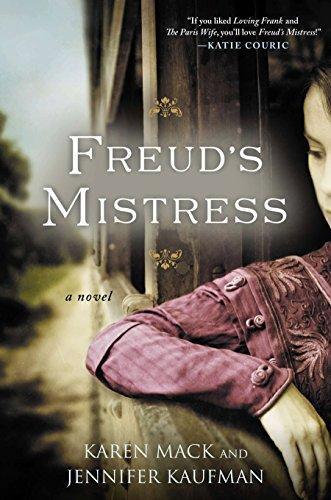

jayvall reviewed Freud's Mistress by Karen Mack
Review of "Freud's Mistress" on 'Goodreads'
3 stars
This novel by Karen Mack and Jennifer Kaufman tells the story of Sigmund Freud's alleged affair with his sister-in-law, Minna. After being fired from her post as a lady's companion, Minna reluctantly moves in with her sister Martha, Sigmund and their six children. Overwhelmed with the children, and lacking the inclination in any case, Martha pays little attention to Sigmund and his theories, other than to point out that after all these years, he's still only an adjunct professor. Minna, on the other hand, is intrigued by Sigmund's theories and is always interested in engaging him in thoughtful debate. Eventually the two are drawn to each other, and Minna must face the fact that she's fallen in love with her sister's husband.
I found FREUD'S MISTRESS to be a hard novel to pin down. The prose itself is very readable, almost as though it's been dumbed down. I can't tell …
This novel by Karen Mack and Jennifer Kaufman tells the story of Sigmund Freud's alleged affair with his sister-in-law, Minna. After being fired from her post as a lady's companion, Minna reluctantly moves in with her sister Martha, Sigmund and their six children. Overwhelmed with the children, and lacking the inclination in any case, Martha pays little attention to Sigmund and his theories, other than to point out that after all these years, he's still only an adjunct professor. Minna, on the other hand, is intrigued by Sigmund's theories and is always interested in engaging him in thoughtful debate. Eventually the two are drawn to each other, and Minna must face the fact that she's fallen in love with her sister's husband.
I found FREUD'S MISTRESS to be a hard novel to pin down. The prose itself is very readable, almost as though it's been dumbed down. I can't tell who the audience is for this book. Presumably, if you're reading it, you have at least a passing interest in Freud. I would never consider myself a Freud-aficionado, but I remember covering his main theories in high school. So why the authors thought it was necessary to explain in detail Freud's well-known theories is a mystery to me. Sure, explain some of the more obscure ones—but I don't need id, ego and superego explained to me. Likewise, I don't think an uneducated person would gravitate to this book, so I found it patronizing that the authors felt the need to explain the Oedipal complex and other well-known psychological theories to the readers. Which makes me question who the audience was intended to be. Is it younger readers? Ones who haven't taken a high school psychology class? If so, that explains why the prose is so plain, but then why write a book about adultery for younger readers?
I didn't dislike the book, and although I found the first half hard to get into, the second half had all of my attention. I just found odd some of the narrative choices the authors made and they pulled me out of the story.