
Well, this is one point of comparison with #Hitler and #Mussolini. No matter how batshit they acted, the bad results were never their fault, always that of the people below them. Historians seem to think that this is a necessary feature of personality cult, not a bug of the #authoritarian system, as it allows to preserve the conviction that the ideology embedded in the "leader" is right and that only other people are incompetent and/or malevolent.
#trump #fascism
https://universeodon.com/@georgetakei/115537930107081861
#mussolini
See tagged statuses in the local BookWyrm community

#Mussolini #DorthyParker #books #history
"Despite evidence of Mussolini’s growing suppression of civil liberties, many in the West gave him their tacit approval, lauding his attempts at organizing and modernizing a country that had suffered economic and political unrest in the post–World War I years. But others saw through 'Il Duce’s' swagger, including writer and critic Dorothy Parker. Mussolini’s novel had seemingly been forgotten, before being resurrected and translated in 1928, to capitalize on his fame. When Parker reviewed the book under the clever title “Duces Wild” for the Sept. 15, 1928, issue of *The New Yorker*, she turned her barbs against Duce, slamming its purple prose and scattershot plotting, claiming that despite locking herself in her apartment she could not even force herself to finish the book.
By the time it was published as an English-language edition, Mussolini himself had dismissed …
#Mussolini #DorthyParker #books #history
"Despite evidence of Mussolini’s growing suppression of civil liberties, many in the West gave him their tacit approval, lauding his attempts at organizing and modernizing a country that had suffered economic and political unrest in the post–World War I years. But others saw through 'Il Duce’s' swagger, including writer and critic Dorothy Parker. Mussolini’s novel had seemingly been forgotten, before being resurrected and translated in 1928, to capitalize on his fame. When Parker reviewed the book under the clever title “Duces Wild” for the Sept. 15, 1928, issue of *The New Yorker*, she turned her barbs against Duce, slamming its purple prose and scattershot plotting, claiming that despite locking herself in her apartment she could not even force herself to finish the book.
By the time it was published as an English-language edition, Mussolini himself had dismissed the book as 'a novel for seamstresses and scandal.' For decades, the church whom Mussolini saw as the enemy, eventually agreed to a pact, known as the Lateran Treaty. Among the concessions the treaty negotiated was recognition of Vatican City as a sovereign nation under control of the Pope, mandatory religious instruction in Italian schools and the outlawing of divorce. One last concession: *The Cardinal’s Mistress* was removed from bookstore and library shelves and soon faded into obscurity before being rereleased in the 1950s, more than a decade after Mussolini’s execution at the hands of the Italian Resistance."
https://www.printmag.com/daily-heller/the-daily-heller-mussolinis-failed-novel/

Autiste à Vaud L'eau finished reading Fascisme, nazisme et régimes autoritaires en Europe by Johann Chapoutot
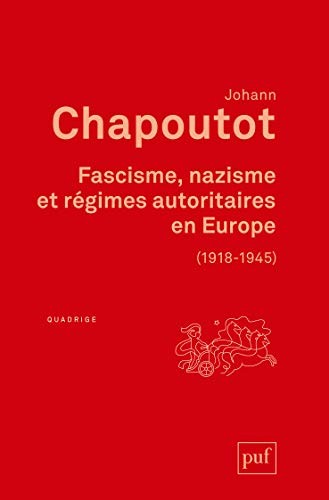
Un ouvrage général, mais malgré tout pointu, sur les notions de #fascisme, #nazisme et de #RégimesAutoritaires. L'auteur parvient à couvrir, en un peu moins de 300 pages, et à l'aide d'une abondante bibliographie, les traits qui définissent ces #idéologies du début du 20è siècle. Tout comme l'a fait Philippe Burrin, dans le livre précédemment lu, il met le doigt sur ce qui distingue l' #autoritarisme du #totalitarisme, le fascisme d'autres formes d' #ExtrêmeDroite.
Cette lecture permet aussi de montrer que notre époque, même si elle présente des similarités avec cette période, s'en différencie aussi énormément. Le monde n'est plus du tout celui du tournant entre le 19e et le 20e siècle. Comme on dit, l'histoire ne repasse jamais deux fois les plats, mais elle hoquette. La détérioration de nos démocraties post-Seconde Guerre Mondiale n'a rien à voir avec les balbutiements des démocraties d'il y a …
Un ouvrage général, mais malgré tout pointu, sur les notions de #fascisme, #nazisme et de #RégimesAutoritaires. L'auteur parvient à couvrir, en un peu moins de 300 pages, et à l'aide d'une abondante bibliographie, les traits qui définissent ces #idéologies du début du 20è siècle. Tout comme l'a fait Philippe Burrin, dans le livre précédemment lu, il met le doigt sur ce qui distingue l' #autoritarisme du #totalitarisme, le fascisme d'autres formes d' #ExtrêmeDroite.
Cette lecture permet aussi de montrer que notre époque, même si elle présente des similarités avec cette période, s'en différencie aussi énormément. Le monde n'est plus du tout celui du tournant entre le 19e et le 20e siècle. Comme on dit, l'histoire ne repasse jamais deux fois les plats, mais elle hoquette. La détérioration de nos démocraties post-Seconde Guerre Mondiale n'a rien à voir avec les balbutiements des démocraties d'il y a 100 ans.
Il va falloir s'y faire, mais nous ne vivons pas du tout un nouveau début de 20e siècle. Nous sommes au début du 21e siècle et nous devrons trouver nos propres termes pour décrire et définir les régimes dits #illibéraux, voire les nouvelles #dictatures qui émergent aux USA, en Europe de l'Est et qui semblent plus que frémir en Europe de l'Ouest. Après tout, nos ancêtres ont bien dû en faire de même pour faire sens des régimes fascistes, nazis, catholico-conservateurs et soviétiques, sans précédents, auxquels ils ont dû faire face.
D'ailleurs, en cela, ils ont été aidés par les promoteurs-mêmes de ces régimes. Aujourd'hui, l'extrême-droite n'a plus grand-chose à voir avec celle des années 70-80. Et d'ailleurs, les promoteurs de la nouvelle #GuerreCulturelle contre le #wokisme et le #gauchisme, se qualifient d' #altright ou de #FarRight . Sans se limiter à leurs propres auto-qualifications, je pense qu'elles peuvent nous aider à identifier ces phénomènes politiques. Est-ce que Trump est fasciste? Et Victor Orban? Vladimir Putin? Tayip Erdogan? Et Benjamin Netnayahou? En tous cas, il manque plusieurs critères pour classer leurs personnalités et leurs méthodes dans cette catégorie. Ça ne signifie pas pour autant qu'ils soient moins nocifs et dangereux que des #Mussolini, #Hitler, #Stalin, #Pétain, #Salazar, #Franco de cette époque. Mais pour les combattre et résister, il va falloir les étudier dans le contexte actuel et pas simplement tenter des décalques entre eux et les leaders totalitaires ou autoritaires des années 1920.
Cependant, ce genre de lecture reste essentielle, à mon sens, pour nous aider à faire sens de notre époque, parce que, comme déjà dit, l'histoire fait des crises de hoquet et qu'il faut voir quels sont les éléments philosophiques, moraux, idéologiques et politiques qui restent, se transmettent, renaissent ou se renouvellent. Et à quoi ils peuvent contribuer à donner naissance.
Face à l’#impérialisme de #Poutine, l’aveuglement du « #campisme »
https://www.mediapart.fr/journal/international/240825/face-l-imperialisme-de-poutine-l-aveuglement-du-campisme?xtor=CS3-5
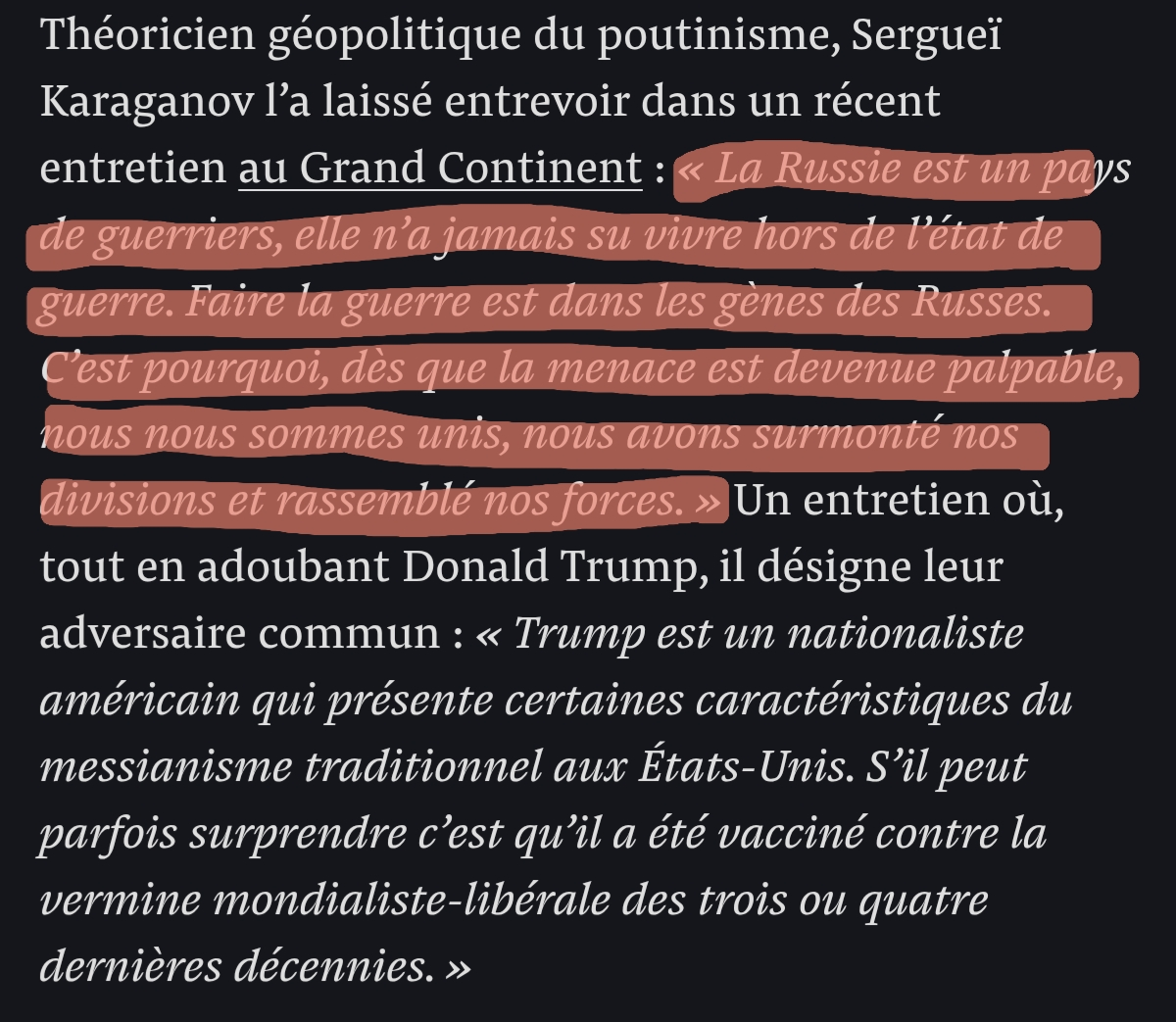
C'est encore pire. Dans cette perspective, cette vieille #gauche anti-USA, rebut de la guerre froide, en arrive à considérer des #fascistes comme des alliés. La citation ci-dessous est un quasi-copié-collé de discours de #Hitler ou de #Mussolini sur leurs peuples, pour qui la guerre n' est pas juste un moyen,mais l'objectif principal de leur existence, guidée par un #masculinisme absolu.
Face à l’#impérialisme de #Poutine, l’aveuglement du « #campisme »
https://www.mediapart.fr/journal/international/240825/face-l-imperialisme-de-poutine-l-aveuglement-du-campisme?xtor=CS3-5
C'est encore pire. Dans cette perspective, cette vieille #gauche anti-USA, rebut de la guerre froide, en arrive à considérer des #fascistes comme des alliés. La citation ci-dessous est un quasi-copié-collé de discours de #Hitler ou de #Mussolini sur leurs peuples, pour qui la guerre n' est pas juste un moyen,mais l'objectif principal de leur existence, guidée par un #masculinisme absolu.

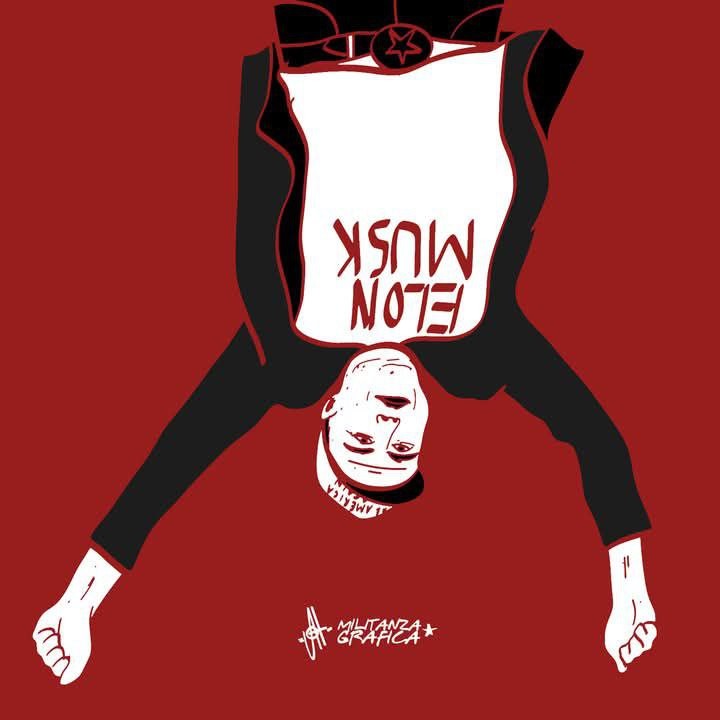
B. #Mussolini 1945
E. #Musk 2025
@milit_grafica
@Antifaxismoa

janhoglund replied to janhoglund's status
“…Ilyin is standing for the same values he is praising in Italian fascism and German national-socialism.”
—Anton Barbashin, Ivan Ilyin: A Fashionable Fascist
#ilyin #mussolini #hitler
janhoglund replied to janhoglund's status
“…his [Ivan Ilyin’s] ideas of spirituality and the Russian state are closely linked to his positive views of the regimes of Hitler, Mussolini, Salazar and Franco.”
—Anton Barbashin, Ivan Ilyin: A Fashionable Fascist
#ilyin #hitler #mussolini #salazar #franco

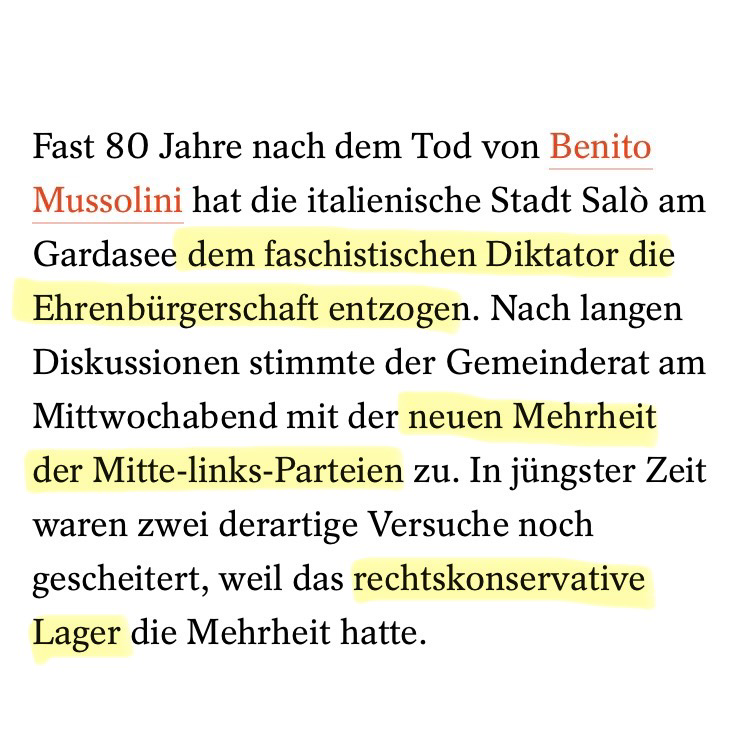
Keine #Ehrenbürgerschaft für den faschistischen Diktator Benito #Mussolini. Nicht einmal dieses Minimum an Zivilität ist Konsens in der italienischen Rechten. Das ist der ideologische Sumpf, dem Giorgia #Meloni und ihr Regierung entspringt. Armes #Italien.

Content warning fascism and cannoncini
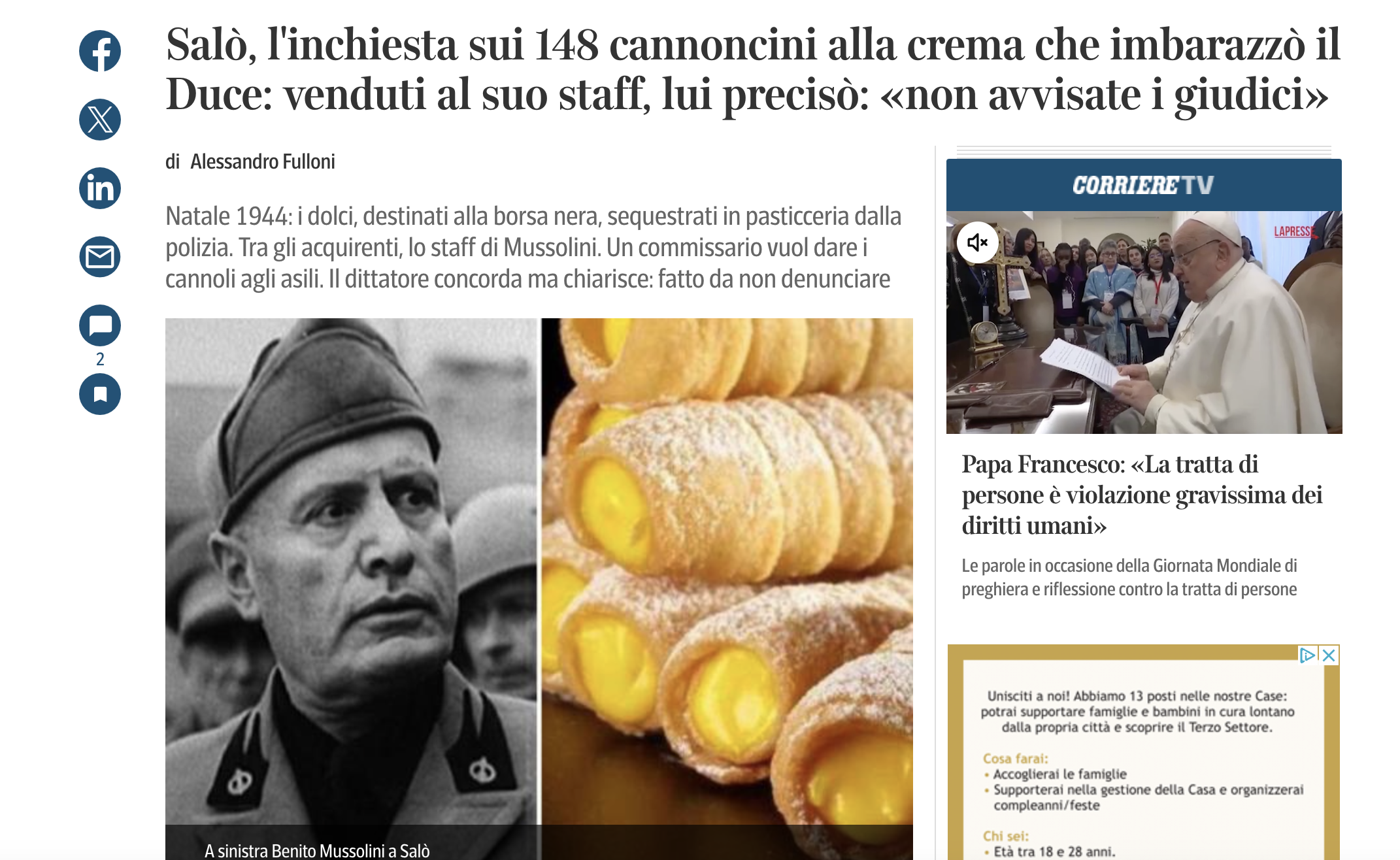
#Italy is being shaken by this bomb revelation:
during Xmas of 1944, the police intercepted a shipment of 148 "#cannoncini" (puffy pastry rolls filled with cream) that someone bought via black market for the vacations - while people were starving during WWII.
...Guess the embarrassment of the poor police guy, when discovering they were all for #Mussolini & friends.
The former then decided to "donate" them to children and silenced the new.
https://www.corriere.it/cronache/25_febbraio_08/salo-l-inchiesta-sui-148-cannoncini-alla-crema-che-imbarazzo-il-duce-venduti-al-suo-staff-lui-preciso-non-avvisate-i-giudici-090733a1-0fc5-4f63-9d20-8443d077fxlk.shtml

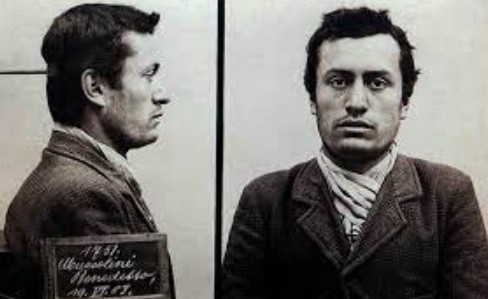
Today in Labor History June 19, 1903: Benito Mussolini, at the time a radical Socialist, was arrested by Bern police for advocating a violent general strike. As strange as it may seem, in light of his rise to become one of the most powerful and violent fascist leaders in the world, Mussolini came from a radical leftist background. In his youth, he idealized figures like Bakunin and Garibaldi. His father, who was a socialist, named him Benito, after Mexico’s liberal leader Benito Juarez. His two middle names, Andrea and Amilcare, were named after Italian socialists Andrea Costa and Amilcare Cipriani.
#workingclass #LaborHistory #fascism #anarchism #mussolini #bakunin #GeneralStrike #socialism #prison

La menzogna alimentata ad arte: disinformazione storica
di Silvio Marconi
Spesso si riducono la disaffezione elettorale, i voltagabbanismi e le scelte di larga parte di quegli elettori dei ceti popolari che, invece, vanno a votare per partiti che praticano politiche antipopolari (e quindi contrarie ai loro stessi interessi materiali e atti
https://www.magozine.it/la-menzogna-alimentata-ad-arte-disinformazione-storica/
La menzogna alimentata ad arte: disinformazione storica
di Silvio Marconi
Spesso si riducono la disaffezione elettorale, i voltagabbanismi e le scelte di larga parte di quegli elettori dei ceti popolari che, invece, vanno a votare per partiti che praticano politiche antipopolari (e quindi contrarie ai loro stessi interessi materiali e atti
https://www.magozine.it/la-menzogna-alimentata-ad-arte-disinformazione-storica/


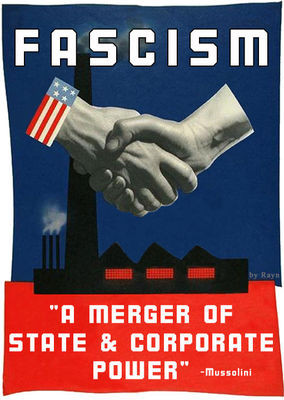

#UmbertoEco Makes a List of the 14 Common Features of #Fascism
in History, Literature, Politics | November 22nd, 2016 101 Comments
"Eco grew up under #Mussolini’s fascist regime, which 'was certainly a dictatorship, but it was not totally totalitarian, not because of its mildness but rather because of the philosophical weakness of its ideology. Contrary to common opinion, fascism in Italy had no special philosophy.' It did, however, have style, 'a way of dressing—far more influential, with its black shirts, than Armani, Benetton, or Versace would ever be.' The dark humor of the comment indicates a critical consensus about fascism. As a form of extreme nationalism, it ultimately takes on the contours of whatever national culture produces it.
1. The cult of tradition. “One has only to look at the syllabus of every fascist movement to find the major traditionalist thinkers. The Nazi …
#UmbertoEco Makes a List of the 14 Common Features of #Fascism
in History, Literature, Politics | November 22nd, 2016 101 Comments
"Eco grew up under #Mussolini’s fascist regime, which 'was certainly a dictatorship, but it was not totally totalitarian, not because of its mildness but rather because of the philosophical weakness of its ideology. Contrary to common opinion, fascism in Italy had no special philosophy.' It did, however, have style, 'a way of dressing—far more influential, with its black shirts, than Armani, Benetton, or Versace would ever be.' The dark humor of the comment indicates a critical consensus about fascism. As a form of extreme nationalism, it ultimately takes on the contours of whatever national culture produces it.
1. The cult of tradition. “One has only to look at the syllabus of every fascist movement to find the major traditionalist thinkers. The Nazi gnosis was nourished by traditionalist, syncretistic, occult elements.”
2. The rejection of modernism. “The Enlightenment, the Age of Reason, is seen as the beginning of modern depravity. In this sense Ur-Fascism can be defined as irrationalism.”
3. The cult of action for action’s sake. “Action being beautiful in itself, it must be taken before, or without, any previous reflection. Thinking is a form of emasculation.”
4. Disagreement is treason. “The critical spirit makes distinctions, and to distinguish is a sign of modernism. In modern culture the scientific community praises disagreement as a way to improve knowledge.”
5. Fear of difference. “The first appeal of a fascist or prematurely fascist movement is an appeal against the intruders. Thus Ur-Fascism is racist by definition.”
6. Appeal to social frustration. “One of the most typical features of the historical fascism was the appeal to a frustrated middle class, a class suffering from an economic crisis or feelings of political humiliation, and frightened by the pressure of lower social groups.”
7. The obsession with a plot. “Thus at the root of the Ur-Fascist psychology there is the obsession with a plot, possibly an international one. The followers must feel besieged.”
8. The enemy is both strong and weak. “By a continuous shifting of rhetorical focus, the enemies are at the same time too strong and too weak.”
9. Pacifism is trafficking with the enemy. “For Ur-Fascism there is no struggle for life but, rather, life is lived for struggle.”
10. Contempt for the weak. “Elitism is a typical aspect of any reactionary ideology.”
11. Everybody is educated to become a hero. “In Ur-Fascist ideology, heroism is the norm. This cult of heroism is strictly linked with the cult of death.”
12. Machismo and weaponry. “Machismo implies both disdain for women and intolerance and condemnation of nonstandard sexual habits, from chastity to homosexuality.”
13. Selective populism. “There is in our future a TV or Internet populism, in which the emotional response of a selected group of citizens can be presented and accepted as the Voice of the People.”
14. Ur-Fascism speaks Newspeak. “All the Nazi or Fascist schoolbooks made use of an impoverished vocabulary, and an elementary syntax, in order to limit the instruments for complex and critical reasoning.”

"The essence of authoritarianism is getting away with crime, and corruption must be at the center of any analysis of how dictatorships operate. A large percentage of actions authoritarians take are about covering up corruption:"
~ Ruth Ben-Ghiat
#strongmen #authoritarianism #Trump #Mussolini #Orbán #Erdogan #Pinochet #JaredKushner
/1
https://lucid.substack.com/p/authoritarians-and-their-sons-in
Charlie Sykes reminds us of history many Americans choose to forget:
Lots of Americans once loved Mussolini — that swagger! That machismo! That decisiveness! Those movie-star looks! He's making Italy stronger!
Mussolini had large numbers of fanboys in business, labor, Hollywood, and the media. Because a solid proportion of Americans have long been fatally attracted to authoritarianism….
#Mussolini #Trump #authoritarianism #StrongMen
https://plus.thebulwark.com/p/remember-when-america-loved-mussolini
Charlie Sykes reminds us of history many Americans choose to forget:
Lots of Americans once loved Mussolini — that swagger! That machismo! That decisiveness! Those movie-star looks! He's making Italy stronger!
Mussolini had large numbers of fanboys in business, labor, Hollywood, and the media. Because a solid proportion of Americans have long been fatally attracted to authoritarianism….
#Mussolini #Trump #authoritarianism #StrongMen
https://plus.thebulwark.com/p/remember-when-america-loved-mussolini