
Bridgman reviewed Home Fire by Kamila Shamsie
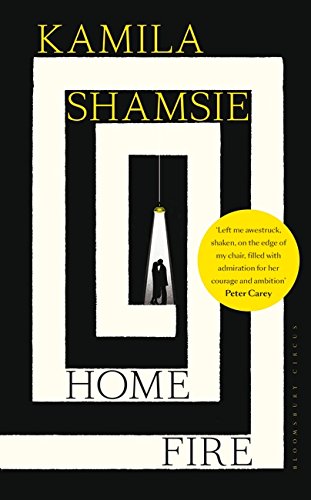
Isma is free. After years spent raising her twin siblings in the wake of their …
Review of 'Home Fire' on 'Goodreads'
5 stars
I had trepidation about reading yet another book about Muslims living in Western cultures and being treated unfairly, blah, blah, blah, and sure enough this book begins with a main character spending a long time at an airport because of her being Muslim. It seems to be a common scene in such books.
I was wrong. Home Fire is fascinating and relatable to someone like me, who's never set foot in a mosque or spent any time talking to a Muslim. It's also brilliantly written.
It takes many elements of the Greek tragedy Antigone, but don't worry if you're not familiar with Sophocles' 441 BCE work. It won't help or hurt your understanding of it if you are. Actually, knowing the play might even be a little of a spoiler, but not the kind that would ruin Home Fire for you.
[a:Kamila Shamsie|168076|Kamila Shamsie|https://images.gr-assets.com/authors/1264510720p2/168076.jpg] has the kind of observational power and ability to put it into words that most other writers can envy but never copy.
Here's a scene in which a man thinks about his girlfriend, who comes and goes without much notice, after she's departed:
He no longer had feelings of dread if she didn't turn up when he expected, or of relief when she did—he had come to accept that he was who she wanted to be with. The joy of that moved through the days with him, burnishing every moment, even this one in which stretched out on his sofa, listening to the different tones of the rain—clattering against windows, slapping against leaves, pinging off bricks. In Aneeka's company he'd learned to listen to the sounds of the world. "Hear that," she used to say in the beginning, somewhere between a command and a question. Soon he learned the pleasure of being the one to say it to her, hear that, the London we never enter together: the lawn mower rattling against pebbles at the edges of the garden; the differing weight of vehicles on the street outside—the swoosh of the motorcycle, the trundle of the van; the voices of drunk English lovers, matched in pitch though not in tone by caffeinated Italian tourists. Hear that, the varied creaks of the bed frame: the short cry of disappointment when you leave, the long groan of pleasure when you return. Hear that, the quickening of my breath, my blood, when you touch me, just so.