
Levi reviewed Foundation by Isaac Asimov (Foundation, #1)
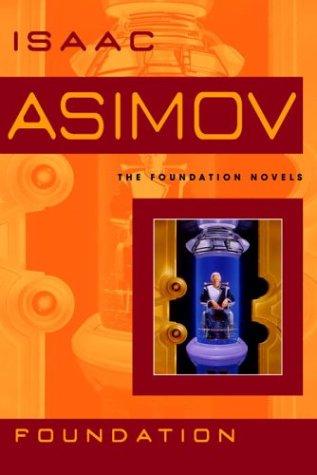
One of the great masterworks of science fiction, the Foundation novels of Isaac Asimov are …
None
4 stars
Asimov's Foundation presents an audacious premise: what if sociology could become so precise that it functions like physics, allowing someone to predict the rise and fall of civilizations thousands of years in advance? It's patently absurd, and yet somehow completely intoxicating.
Hari Seldon, the founder of "psychohistory," foresees the collapse of the galaxy-spanning Empire and the inevitable 30,000-year Dark Age that will follow. But the hook is, he has a plan that can shorten this catastrophe to just 1,000 years by establishing a Foundation of scholars on the galaxy's edge, provided they follow a precise path.
But, for some reason, it's totally fundamental to Seldon's science that they can't know in advance how to solve the problems...he knows what the problems will be and how they will have to solve them, but instead of him just telling them, they have to figure it out for themselves. It's obviously a narrative constraint so that the characters must solve each crisis as it arrives, blind to the larger pattern only Seldon could see. But...it works. It makes for a much better story than the alternative, that's for sure.
The real protagonist isn't any individual character (Seldon himself dies early on) but humanity itself, struggling across millennia. We jump forward in time to witness key moments when Foundation leaders realize they're facing another "Seldon Crisis" and must find solutions that fly in the face of conventional wisdom.
The stories pivot mostly around two Seldon Crises, each of which has an uber smart dude who figures it all out and then has to get the Foundation society to completely reimagine their approach based on how human psychology and social structures have evolved. It's essentially A Series of Really Smart Individuals Saves the Human Race, which ironically undermines psychohistory's core premise that individual actions can't be predicted, only mass behavior.
The execution has its issues. Written in 1951, it carries all the baggage you'd expect—the galaxy's saviors are uniformly male, the dialogue is stiff and theatrical, and Asimov's characters all sound the same. Character development was never his strength; he's all about the big ideas and intricate plotting.
There's a comment I just have to make, after reflecting on how many books have this trope...it is kind of a wet dream to think that if one individual was smart enough, they could save the human race. We all want to think we're that person. Am I going to stop reading books like that? Eh, probably not. Probably not completely, at least. But, I do feel like it's one of those things that now I've seen, I can't un-see.
But honestly, I'm poking too many holes in this to convey how I actually felt about the book. As a whole it was quite good. I found myself genuinely hooked. The ending in particular made me sit back and think about the actual progression of human history, trying to identify the dominant sociological forces of different eras. I feel like I can tell what Azimov was thinking: if you look at history, the pattern kind of makes sense. First we needed religion in order to survive, then trade became the next big way of interacting with each other, etc. I'm obsessed now with trying to predict what the next crisis might be and what radical solution it would require.
And ultimiately that's what I am searching for most in science fiction: when it takes a wild premise and uses it to make you think differently about Big Stuff, like the patterns of human civilization, for instance.
Foundation is the kind of book that you gulp down easily because of its sheer conceptual audacity. It's far from perfect, but the chapters are short and punchy, the scope is genuinely epic, and at just 300 pages, it moves quickly enough that you don't have time to get bogged down in its flaws. I'm already planning to read the rest of the series, almost despite myself.