Rin moves into a new flat on the day the aliens arrive. Their new flatmates …
Unexpectedly adorable
5 stars
I did not except a book with this title to be this adorable. I am only sad it wasn't longer. Apart from the likable found family of characters, I also really enjoyed the world building. I'm definitely reading more from the author.
I did not except a book with this title to be this adorable. I am only sad it wasn't longer. Apart from the likable found family of characters, I also really enjoyed the world building. I'm definitely reading more from the author.
I picked up this book because I was curious about how it interprets tarot cards in the context of social movements - but I got more than that. It completely rearranges the tarot, while keeping traditional symbols and numbers, into a non-linear, community-based, Justice-centered system. It also, apart from of the examples of activism, has very deep, interesting things to say about the possible menanings of each card. And I loved the examples. I learned a lot about social movements - and also the many different facets of activism, from allyship through communication to sustainability. I loved it that instead of taking cards one by one, it highlighted relationships between Majors and Minors of the same numbers, and their references to activist work as a whole. I'm a little sad the court cards didn't get more attention.
I picked up this book because I was curious about how it interprets tarot cards in the context of social movements - but I got more than that. It completely rearranges the tarot, while keeping traditional symbols and numbers, into a non-linear, community-based, Justice-centered system. It also, apart from of the examples of activism, has very deep, interesting things to say about the possible menanings of each card. And I loved the examples. I learned a lot about social movements - and also the many different facets of activism, from allyship through communication to sustainability. I loved it that instead of taking cards one by one, it highlighted relationships between Majors and Minors of the same numbers, and their references to activist work as a whole.
I'm a little sad the court cards didn't get more attention.
"This book is an essential collection of writing by leading queer tarot writers and community …
Personal journeys and tarot practice
5 stars
A fascinating collection of personal essays as well as practical advice on queering the tarot. I enjoyed the different authors' points of view, and the stories of their personal journeys alongside the tarot practice. These kinds of books are much more interesting to me than the ones that solely focus on advice - and diverse voices of queerness spoke authentically about finding new ways to read tarot. Some of the essays gave me whole new perspectives on things I would like to try, such as reframing the court cards, or finally trying to read reversed cards (this speaks to how good that essay was, I never wanted to read reversed before!). My favorite essay, however, was the one on the High Priestess and identity. It was deep understanding, poetry, personal storytelling, and tarot excellence all in one.
A fascinating collection of personal essays as well as practical advice on queering the tarot. I enjoyed the different authors' points of view, and the stories of their personal journeys alongside the tarot practice. These kinds of books are much more interesting to me than the ones that solely focus on advice - and diverse voices of queerness spoke authentically about finding new ways to read tarot. Some of the essays gave me whole new perspectives on things I would like to try, such as reframing the court cards, or finally trying to read reversed cards (this speaks to how good that essay was, I never wanted to read reversed before!). My favorite essay, however, was the one on the High Priestess and identity. It was deep understanding, poetry, personal storytelling, and tarot excellence all in one.
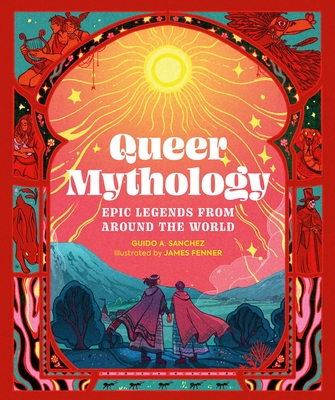
I loved the concept, and the selection of stories was good. However, I would have liked to have sources for the myths (and folktales - not all are myths), because the claim that "None of the stories retold here have been significantly changed" doesn't really stand up. Significant elements were changed in most of them (the ones I know anyway) - not in terms of queerness, but in terms of narrative and symbolism. A lovely read, but more of a creative adaptation than a retelling.
I loved the concept, and the selection of stories was good. However, I would have liked to have sources for the myths (and folktales - not all are myths), because the claim that "None of the stories retold here have been significantly changed" doesn't really stand up. Significant elements were changed in most of them (the ones I know anyway) - not in terms of queerness, but in terms of narrative and symbolism. A lovely read, but more of a creative adaptation than a retelling.
Heracles, hero of Greece, dedicates all his feats to Hera, goddess of family. Heracles’ mother …
This is how you retell mythology
5 stars
I want to buy a print copy of this book just so I can hug it. Not just because it manages to do something new and exciting within the currently popular genre of myth retellings (if I see one more Hades-Persephone grumpy-sunshine romance I'm gonna scream), but also because it manages to be extremely, absolutely lovable. For the first time in my life I cared about Herakles, who is portrayed not as the usual hypermasculine macho warrior hero, but rather a kind, gentle, somewhat naive, tragic character. A tragic himbo, if you will. Which fits this myth well, because people tend to skip over the fact of WHY he had to do the labors to begin with. John Wiswell took that starting point of trauma and tragedy, and ran with it. On top of this, he did it marvelously. The book is well written. Funny when it needs to be, …
I want to buy a print copy of this book just so I can hug it. Not just because it manages to do something new and exciting within the currently popular genre of myth retellings (if I see one more Hades-Persephone grumpy-sunshine romance I'm gonna scream), but also because it manages to be extremely, absolutely lovable. For the first time in my life I cared about Herakles, who is portrayed not as the usual hypermasculine macho warrior hero, but rather a kind, gentle, somewhat naive, tragic character. A tragic himbo, if you will. Which fits this myth well, because people tend to skip over the fact of WHY he had to do the labors to begin with. John Wiswell took that starting point of trauma and tragedy, and ran with it.
On top of this, he did it marvelously. The book is well written. Funny when it needs to be, but also shows a deep knowledge and understanding of myth (and puns). There were many small details sprinkled throughout, references to other myths, which delighted me. Sometimes I could see the author playing with the expectations of the reader versed in myth (during the second half of the book, knowing how Herakles' story ends originally, I was definitely stressed). The worldbuilding was also delightfully creative, from the way the Hydra's mind worked all the way to how Herakles' own powers worked, or how Olympus functioned. Some people complained about the modern language in the narration, but I liked it. And no, it wasn't simple at all. Many parts, turns of phrases were gorgeously eloquent. The story started out light and funny, and I almost forgot where we were headed... and then we slammed into the rollercoaster ride that made me cry and laugh through the rest of the book, and warmed my heart all the way.
I especially enjoyed that the book has a split p.o.v. between Herakles and Hera. And the author did just as well with her as he did with him. While keeping the usual tropes about Hera's wrath and jealousy, the story also maanaged to make her complex and deeply human (for a goddess). Again, for the first time, I grew to like her. And all this within a myth where she has always famously been a horrible villain. That's good writing, people. That's empathy.
I also liked that the story, while heartwarming and likable, did not slide into all-rosy kitsch or gave easy solutions to anything. There is no ending with a bow. But still, there is an ending that was deeply satisfying. I am going to have a long book hangover after this.
This. This is how you retell mythology.
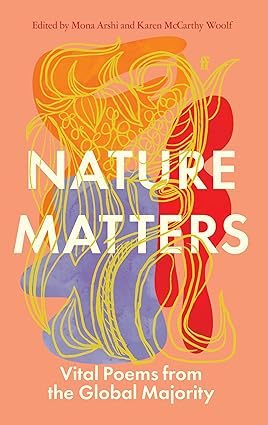
(ARC copy) I was fascinated by this collection for several reasons. One is that it introduced me to a whole lot of poets (from the past 50 years) I have not known before. I was enjoying the sense of recognition with those I knew, and the excitement of discovery for those I want to read more from now. Obviously the goal of the collection was to introduce readers to nature poetry written by global majority poets - but through this lens, it also challenges what qualifies as "nature poetry" and even what qualifies as "nature." The poems had a wide range of styles, forms, and topics; and themes woven through such as identity, immigration, climate crisis, colonialism, etc. There were several that deeply touched me and invited longer contemplation. Others knowingly challenged the reader with text that was disjointed, multilingual, written in dialect, or spliced into other texts (the latter …
(ARC copy)
I was fascinated by this collection for several reasons. One is that it introduced me to a whole lot of poets (from the past 50 years) I have not known before. I was enjoying the sense of recognition with those I knew, and the excitement of discovery for those I want to read more from now. Obviously the goal of the collection was to introduce readers to nature poetry written by global majority poets - but through this lens, it also challenges what qualifies as "nature poetry" and even what qualifies as "nature." The poems had a wide range of styles, forms, and topics; and themes woven through such as identity, immigration, climate crisis, colonialism, etc. There were several that deeply touched me and invited longer contemplation. Others knowingly challenged the reader with text that was disjointed, multilingual, written in dialect, or spliced into other texts (the latter one, Karen McCarthy Woolf's "Horse Chestnut I" was one of my favorites in the book). It would sound like a cliché to say it is a diverse collection, but I don't only mean it by the ethnic identities of the poets. I love reading nature poetry, but I have often felt that some collections I came across presented a very pretty, "poetic", inspiring image of nature. The nature represented in these poems is different. Viscerally connected to humans in all ways good and bad, messy, fascinating, ever-present, meaningful, metaphorical, mythical, personal. It was refreshing to venture beyond admiration into emotional and artistic complexity.
ARC copy. I am not going to spend this review talking about how much this book made me adore and cherish Marsha as a person. I had seen mentions of her before in articles about her (underplayed) role in Stonewall, but never really seen her described with this much rich detail and this much empathy. She truly was a unique and special and splendid person. What I would like to highlight more, because I think it is worth talking about, is how great this book is within its genre as a nonfiction biography. It is well researched and well put together - and at the same time it retain a sense of sharing collective stories about someone who was loved and who is missed. It is written by a Black trans woman about a Black trans elder, and as such it is equal parts biography, history, tradition-bearing and holding witness. …
ARC copy.
I am not going to spend this review talking about how much this book made me adore and cherish Marsha as a person. I had seen mentions of her before in articles about her (underplayed) role in Stonewall, but never really seen her described with this much rich detail and this much empathy. She truly was a unique and special and splendid person.
What I would like to highlight more, because I think it is worth talking about, is how great this book is within its genre as a nonfiction biography. It is well researched and well put together - and at the same time it retain a sense of sharing collective stories about someone who was loved and who is missed. It is written by a Black trans woman about a Black trans elder, and as such it is equal parts biography, history, tradition-bearing and holding witness. It draws in voices of people who knew and loved Marsha and have seen different sides of her. At the same time, the book is also a concise and much needed queer history from the 1960s to the 2010s in the USA. It gives a lot of cultural background to Stonewall, and also traces the Pride movement from its inception through various decades through Marsha's experience (dealing with how and why transgender people of color especially were sidelined in the movement). I was also fascinated by how well the author wove in a larger context of activisim, showing how Marsha's personal actions played a much larger role, and left a much larger imprint, in the queer rights movement to this day. I learned a lot about art as activism, care as activism, gender expression as activism. Marsha's work was truly intersectional in a way people are re-learning to do it nowadays.
All in all, this book is about a fascinating, amazing person, written with love, care, and attention to detail. It talks about how cultural context shaped Marsha's life, and how Marsha shaped culture. It is queer history at its best. I am so glad I got to read it.
I would absolutely love to read more stories set in this world. Written by this author. It was likable, and well crafted, and eloquent, and I loved the characters a lot.
A kitchen window now and then looks out across a different world. An asteroid scanner …
My soul needed this book
5 stars
This book was so good for my soul. It contains stories, poems and illustrations that are all centered on hope - not toxic positivity, but hope as resistance, small kindnesses as magic. The illustrations and the text, both works of the author, existed together perfectly. Many of the stories made me tear up, but in a happy, joyful way. Each was a self-contained story, eloquently written, with its own well-built world, but I knew that they would end on a hopeful note, and that made reading a joyful exerience too. I read it slowly so I could savor the stories and the poems individually. This book managed to be cozy and healing without ever being cheesy or cliché. I am so happy I got to read it.
Short and interestig read, a good introduction. Not as outdated as some reviews made it out to be (sure, it uses Myspace and LiveJournal but the underlying questions are the same). However, it focuses on one narrow definition of Paganism. Still, I am glad I picked it up.
Short and interestig read, a good introduction. Not as outdated as some reviews made it out to be (sure, it uses Myspace and LiveJournal but the underlying questions are the same). However, it focuses on one narrow definition of Paganism. Still, I am glad I picked it up.
Winter Fae takes a job at the Summer Palace with two goals in mind: keep …
Very cozy
4 stars
A very cute, sweet, feel-good story. It didn't want to be more than it was, kind of a low key cozy fantasy with two likable characters. It was indeed a cozy read.
A very cute, sweet, feel-good story. It didn't want to be more than it was, kind of a low key cozy fantasy with two likable characters. It was indeed a cozy read.
I still adore the worldbuilding with all of its cultural references, and love the representation in the diverse character cast. However, the thing that makes this book an exceptionally great read is the personality of its hero. Teo is not a brooding Chosen One propped up by a cast of friends. He IS the supportive, goofy best friend who is somehow also the lead, but he keeps checking on the wellbeing and needs of all his companions. His main power is not being chosen, it is deep empathy. I loved that, and it made the whole book extremely lovable.