Mainly reading queer and trans literature. Also a bit of SFF. My main fediverse account is lgbtqia.space/@jaelisp
Find me elsewhere: linkstack.lgbt/@jaelyn
Importing my reviews from Storygraph to here was hell, so I'm sorry if some of my reviews ended up on blatantly the wrong book. I'm still trying to find everything that Bookwyrm put in the wrong place.
For six years Richard and Tobias have written to each other sharing every detail of …
Cosy and adorable
4 stars
Amazingly sweet novella of two quiet nerdy trans guy pen pals finally meeting up for Christmas. I want to curl up for a cosy winter with these two so badly and I'd burn the world to keep them happy and safe!
Amazingly sweet novella of two quiet nerdy trans guy pen pals finally meeting up for Christmas. I want to curl up for a cosy winter with these two so badly and I'd burn the world to keep them happy and safe!
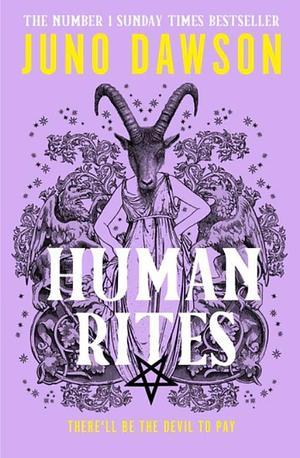
With Her Majesty’s Royal Coven in shambles and the fate of the world hanging in …
A solid conclusion to the Desperate Witches of Hebdon Bridge
5 stars
My opinion on this series (Her Majesty's Royal Coven) has jumped up and down a bit over time. It's very strong as a witchy girlpower fantasy series. I love the setting, world and ideas. This book as the conclusion has a strong third part to ramp up the tension (if the first half is rather slow off the ground which maybe gives me more focus on my criticisms for this instalment vs the first two).
However, I do feel that the characters can fall flat sometimes. For such large cast, there isn't as much definition between the main group as Juno attempts to create. The spice girls analogy is heavy but in that it feels like each character has their set role but without a distinct voice behind their POVs. Ultimately, I think the author's voice overpowers any real individuality in the characters' voices (compounded by having so many …
My opinion on this series (Her Majesty's Royal Coven) has jumped up and down a bit over time. It's very strong as a witchy girlpower fantasy series. I love the setting, world and ideas. This book as the conclusion has a strong third part to ramp up the tension (if the first half is rather slow off the ground which maybe gives me more focus on my criticisms for this instalment vs the first two).
However, I do feel that the characters can fall flat sometimes. For such large cast, there isn't as much definition between the main group as Juno attempts to create. The spice girls analogy is heavy but in that it feels like each character has their set role but without a distinct voice behind their POVs. Ultimately, I think the author's voice overpowers any real individuality in the characters' voices (compounded by having so many voices, diluting the time you get to focus). Throw in an egregious amount of pop-culture and brand references (holy shit these are going read VERY dated in 10-20 years) and I found myself getting distracted away from the parts I enjoyed.
I enjoyed this series at the start more as I was in the mood for it. So I'm likely being more critical of it today as I'm contrasting it with some more recent reads that I absolutely adore. I do find it a compelling read still with some characters I love, plenty of interesting ideas or different takes on the tired cliches, and an important fuck you to certain people who would be enraged by these books.
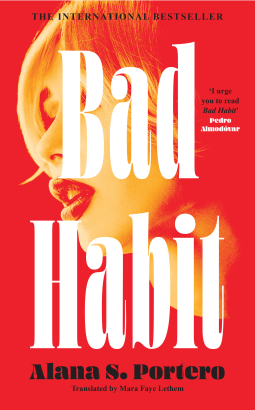
Combining the raw realism and vulnerability of Shuggie Bain and Detransition, Baby with the poignant …
"Women who live in the way they want, who age on their own terms and wear their lives etched into their faces, are treated with pathos and mockery because they are feared."
5 stars
We follow a familiar voice of a trans woman growing up in a working class estate in 1980s/90s Madrid. Her story is set against the heroine and AIDS epidemics, fascist and patriarchal violence, and class struggles; but through the vivid and intimate details, she paints a picture of hope, love, sisterhood and solidarity.
One incredibly strong element for me is how clearly non-linear the character's journey is; as for many of us our early forays are met with violence of one kind of another that set us back into hiding. We lean back into the social codes and camouflage of our culture to survive - a survival all the more painful when we've had a taste of living and are punished for it.
As a result, I found Alana's insight lent itself to a story particularly heartbreaking in his hopefulness; a tragedy born of the joys we get …
We follow a familiar voice of a trans woman growing up in a working class estate in 1980s/90s Madrid. Her story is set against the heroine and AIDS epidemics, fascist and patriarchal violence, and class struggles; but through the vivid and intimate details, she paints a picture of hope, love, sisterhood and solidarity.
One incredibly strong element for me is how clearly non-linear the character's journey is; as for many of us our early forays are met with violence of one kind of another that set us back into hiding. We lean back into the social codes and camouflage of our culture to survive - a survival all the more painful when we've had a taste of living and are punished for it.
As a result, I found Alana's insight lent itself to a story particularly heartbreaking in his hopefulness; a tragedy born of the joys we get to so briefly taste. But a reoccurring element for me was how precious our solidarity and community is.
When a fall from the mast leaves Alba Marsh unable to sail, he finally has …
Rageful Horny Merman Fun
4 stars
An adorable, horny and vengeful romance between a trans man indentured sailor on the run to track down his mother, and a merrow (merman) hungrily eating those who threaten the sailor. Together they delve into the messed up secret of a small seaside town in between rather hot mating sessions.
I enjoyed this a lot, even if the plot sometimes drifted into the background more often than I'd like. Though despite that, i wont pretend that I come for the spice, yet stayed for the rage. The ending is quite cathartic in the way queer fiction does best.
An adorable, horny and vengeful romance between a trans man indentured sailor on the run to track down his mother, and a merrow (merman) hungrily eating those who threaten the sailor. Together they delve into the messed up secret of a small seaside town in between rather hot mating sessions.
I enjoyed this a lot, even if the plot sometimes drifted into the background more often than I'd like. Though despite that, i wont pretend that I come for the spice, yet stayed for the rage. The ending is quite cathartic in the way queer fiction does best.
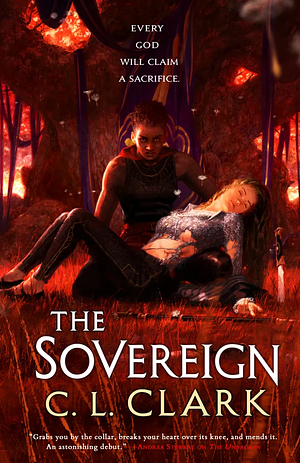
The Sovereign brings princess Luca and soldier Touraine together one last time in the thrilling …
She was changing it ... by making them reckon with her prescence.
5 stars
As someone who tends to prefer stand alone stories, it has been a long time since I have anticipated the conclusion to a trilogy like this and perhaps the first time I have reserved one in advance.
But Touraine is someone who has captivated me as a character grappling with their identity under colonialism. This reflects both in the realm of empires and on a personal level with Luca. And while that relationship on the surface is characterised by Luca's royal status, it is as true for any interpersonal relationship where you have differing colonial legacies.
This final book deftly brings to a head how Touraine has to choose who she defines herself by the future she builds. Notably, by changing her colonial culture "by making them reckon with her presence". I am also so happy with how it has been resolved. All too often historic fantasies based …
As someone who tends to prefer stand alone stories, it has been a long time since I have anticipated the conclusion to a trilogy like this and perhaps the first time I have reserved one in advance.
But Touraine is someone who has captivated me as a character grappling with their identity under colonialism. This reflects both in the realm of empires and on a personal level with Luca. And while that relationship on the surface is characterised by Luca's royal status, it is as true for any interpersonal relationship where you have differing colonial legacies.
This final book deftly brings to a head how Touraine has to choose who she defines herself by the future she builds. Notably, by changing her colonial culture "by making them reckon with her presence". I am also so happy with how it has been resolved. All too often historic fantasies based around monarchies end in a victory for the status quo or a benevolent dictator. Finally here we have a proper, messy, conversation around what real change looks like. Not just as far as the world goes, but how we've seen the monarchy impact Luca and Touraine really shows how there is no just exercise of imperialism.
As conclusions go, for both the individuals and the world, this is perhaps the most thoughtful understanding of power and corruption I've read.
Still here after the colonialism part? Good, so it's also hot. As much as narrative and the worldbuilding is all beautiful; Sabine holds a special place in my heart. I didn't get why people weren't talking about her more after the second book. That charming wine making fencer seducing every girl around her and eyeing up threesomes... she stole my heart. Chapter 15 was... mmmmmm long awaited. And as much as I expected the ending, I still cursed loudly when it came.
In the second installment of C.L. Clark's Magic of the Lost trilogy, soldier Touraine and …
Review from Storygraph
5 stars
Content warning
May be a few mild spoilers for The Unbroken here, but I’ll try to keep surface level
Faithless continues the very soured relationship between Touraine – now on the council of her liberated homeland of not-Algeria – and Luca – not-yet-Queen of not-France. While Unbroken was set entirely in not-Algeria, Faithless is based around the court intrigue of not-France as Luca attempts to secure her throne from her uncle who is overstaying his welcome as regent like that friend who just needed one night on your couch while looking for a new place and now leaves a trail of soggy cereal around the flat 6 months later.
It takes a while to get started, with the court intrigue only beginning in earnest with a murder and a quest to track down not-France’s native magic (which they cast off in a bout of magical state secularism to go round banning other countries’ “uncivilized” magical traditions. But it’s threaded by constant tension in Touraine and Luca’s transactional relationship, punctuated by the marquis wine fop Sabine who does not let anything get in the way of her desire for a threesome with them both.
It felt a little less directed than the first due to the nature of being a bit more bottled in court politics than the fate and dynamics of an entire colony of people. But I feel like it sets up a lot for the third (final?) book so might well pay off well there.
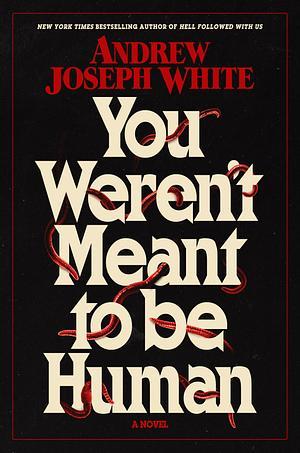
Alien meets Midsommar in this chilling debut adult novel from award-winning author Andrew Joseph White …
A natural and confident shift to adult horror from AJW
5 stars
I was excited to read Andrew's first foray from YA into adult horror. It seemed like a natural jump as his tone had always erred more mature. It certainty doesn't disappoint with some heavy body horror around self mutilation and pregnancy. I've always found horror based around dysphoria - in this case trans masc pregnancy, to be so personal it is hits in such a violent way compared to other topics.
Crane works in a gas station, one of many fronts for a hive of worms and flies of unclear origin. Crane and the others working for the hive are all picked up, "saved", in moments of desperation and hopelessness. But in exchange the Hive demands loyalty, no matter the cost.
Certainly an thread of radicalisation and abuse combining with Crane's craving for abuse and abdication of control. That cult aspect is something that feels familiar from his …
I was excited to read Andrew's first foray from YA into adult horror. It seemed like a natural jump as his tone had always erred more mature. It certainty doesn't disappoint with some heavy body horror around self mutilation and pregnancy. I've always found horror based around dysphoria - in this case trans masc pregnancy, to be so personal it is hits in such a violent way compared to other topics.
Crane works in a gas station, one of many fronts for a hive of worms and flies of unclear origin. Crane and the others working for the hive are all picked up, "saved", in moments of desperation and hopelessness. But in exchange the Hive demands loyalty, no matter the cost.
Certainly an thread of radicalisation and abuse combining with Crane's craving for abuse and abdication of control. That cult aspect is something that feels familiar from his other books, though each with its own distinct tone.
Gertrude Stein and Alice B Toklas are the most famous married couple of Modernism, icons …
"They mostly want it in the EE Cummings section"
5 stars
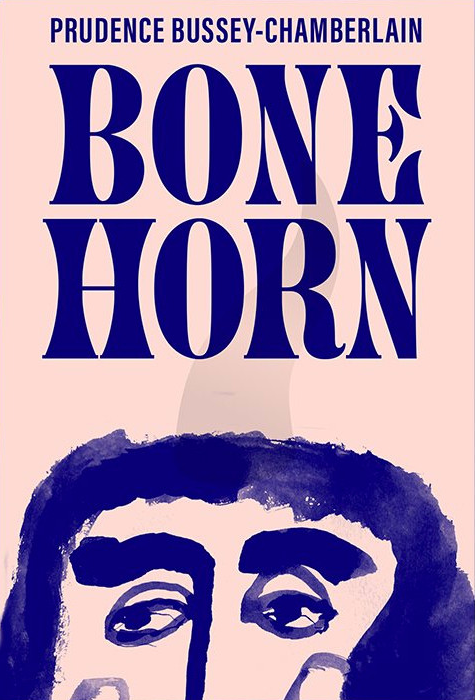
A private investigator and former academic gets an unusual mystery from an anonymous client: Find the secret horn of Alice B. Toklas, hidden from the world under her thick fringe and low brimmed hats.
Needing the money to support her kid and still looking for direction amidst the grief left by the death of her partner, she scours archives and interviews contacts from Paris to San Francisco hoping for a lead.
This book is perfect if you've ever been tempted to spice up your English Lit dissertation with high stakes tension, noir-esque monologues on the nature of grief and copious amounts of gay sex*. Indeed it seems every supporting character with a name is rapidly identified as queer and fucked (yet in a very unsatisfying, grief ridden private detective way); and I am here for that energy.
It strikes a wonderful balance of sincerity and absurdity that …
A private investigator and former academic gets an unusual mystery from an anonymous client: Find the secret horn of Alice B. Toklas, hidden from the world under her thick fringe and low brimmed hats.
Needing the money to support her kid and still looking for direction amidst the grief left by the death of her partner, she scours archives and interviews contacts from Paris to San Francisco hoping for a lead.
This book is perfect if you've ever been tempted to spice up your English Lit dissertation with high stakes tension, noir-esque monologues on the nature of grief and copious amounts of gay sex*. Indeed it seems every supporting character with a name is rapidly identified as queer and fucked (yet in a very unsatisfying, grief ridden private detective way); and I am here for that energy.
It strikes a wonderful balance of sincerity and absurdity that kept me laughing yet deeply invested. It's also a great way to pick up some queer and literary history!
*=Disclaimer: I don't care how subby you are, if your ACAB doesn't include fit lesbian policewomen who want to dominate you, it's not ACAB. Get some standards, girl.
An important voice on rethinking how we build our public spaces
4 stars
This is a fascinating book exploring the interrelationships between women and the cities we inhabit. From gentrification, harassment, transit, pop culture, accessibility and design assumptions that focus on the white cis male, Kern shows how women survive and are failed by the policies that build the modern city.
While many points may feel obvious to anyone who has experienced them, the book does an excellent job tying together the experience and forces at play while reflecting on the intersectionality at play in these issues. However there would likely be more depth on that last point if it drew in more from other non-white authors instead of dwelling on Kern considering her privilege.
It is also a little frustrating in not offering much in the way of alternative models. It does give excellent action points throughout but it is better at raising questions than answering them. This of course …
This is a fascinating book exploring the interrelationships between women and the cities we inhabit. From gentrification, harassment, transit, pop culture, accessibility and design assumptions that focus on the white cis male, Kern shows how women survive and are failed by the policies that build the modern city.
While many points may feel obvious to anyone who has experienced them, the book does an excellent job tying together the experience and forces at play while reflecting on the intersectionality at play in these issues. However there would likely be more depth on that last point if it drew in more from other non-white authors instead of dwelling on Kern considering her privilege.
It is also a little frustrating in not offering much in the way of alternative models. It does give excellent action points throughout but it is better at raising questions than answering them. This of course may be unfair of me as such systemic problems do not come packaged with easy solutions, the lack of which does not make it any less pertinent to raise the issue so comprehensively.
It leaves a lot to consider and work on as we challenge our own assumptions and rebuild our cities to support those they fail.
An impassioned discussion about the alternative ways to form relationships and resist capitalism.
Capitalist …
"Experiments in living and relating matter because – amidst everyday and structural violence – they can expand the realm of the possible and prefigure the future."
4 stars
Rosa delivers a strong critique of how the heterosexual, monogamous nuclear family unit was built to serve the needs of capitalist economics and woefully fails the individual and society at large in the midst of rising poverty and systemic discrimination.
Instead we're invited to look alternative perspectives on intimacy and community as well as challenging the primacy of monogamous romantic bonds drawing on queer, feminist and anti-colonial perspectives, especially those from the aro/ace & QPR community. Rosa covers aspects the hollowness of the wellness industry, state-sanctioned (and erased) relationships in housing, taxes and death, and the demotion of friendship bonds relative to marriage.
"For queers, trans people and other marginalised groups such as sex workers and rough sleepers, mutual, collective mothering in a broader support network has always been the norm. Amongst these communities, kinship networks are chosen and porous – or, as the writer Armistead Maupin …
Rosa delivers a strong critique of how the heterosexual, monogamous nuclear family unit was built to serve the needs of capitalist economics and woefully fails the individual and society at large in the midst of rising poverty and systemic discrimination.
Instead we're invited to look alternative perspectives on intimacy and community as well as challenging the primacy of monogamous romantic bonds drawing on queer, feminist and anti-colonial perspectives, especially those from the aro/ace & QPR community. Rosa covers aspects the hollowness of the wellness industry, state-sanctioned (and erased) relationships in housing, taxes and death, and the demotion of friendship bonds relative to marriage.
"For queers, trans people and other marginalised groups such as sex workers and rough sleepers, mutual, collective mothering in a broader support network has always been the norm. Amongst these communities, kinship networks are chosen and porous – or, as the writer Armistead Maupin has put it, ‘logical’ family. While this type of kinship may include communal living, it may also be diffuse, between people who share spaces and moments dedicated to care, connection and community. This could take infinite shapes: shared creative pursuits, childcare cooperatives, support groups, sex parties, festivals, co-authoring, political organising. As the comedian and historian Jules Joanne Gleeson argues: ‘for queers, the prospect of putting an end to the domination of private households can come to seem less extreme and more hopeful’ because it would mean ‘an end to the farce of most queers being raised by heterosexuals’."
The book sparked a lot of thoughts for me as it progressed through a broad array of alternative perspectives on bonds to others. This especially hit close to home with my own experiences with QPR, polyamory and intensity in how I naturally relate to everyone in my circle. It's well worth a read if you feel nuclear bonds as isolating and the capitalist dominion over social spheres disempowering.
According to ancient Japanese protocol, foreigners deigning to approach the emperor were to adopt a …
"I suddenly wanted to tell her how delighted I was at being the instrument of her pleasure."
4 stars
Amélie was excited to move to Japan to take an entry level position at a large corporation. However despite starting at the bottom, Amélie's repeated well intentioned and often hilarious blunders send her spiralling ever further down the ladder. Between cultural missteps in the Japanese corporate culture and small but impactful blunders in the even more mundane work assigned to her, she earns the rigorous fury of her manager, one of only three women in the entire company, who sees Amélie's honest mistakes as a deliberate attempt to undermine her.
On the face of it, this book might be about Amélie or a broader contrast to Japanese culture. But at it's centre is the manager, Fubuki, and how her life as an isolated career woman in Japan has shaped her and her world view. The tragedy is how much Amélie worships Fubuki. Despite how much Fubuki starts to hate …
Amélie was excited to move to Japan to take an entry level position at a large corporation. However despite starting at the bottom, Amélie's repeated well intentioned and often hilarious blunders send her spiralling ever further down the ladder. Between cultural missteps in the Japanese corporate culture and small but impactful blunders in the even more mundane work assigned to her, she earns the rigorous fury of her manager, one of only three women in the entire company, who sees Amélie's honest mistakes as a deliberate attempt to undermine her.
On the face of it, this book might be about Amélie or a broader contrast to Japanese culture. But at it's centre is the manager, Fubuki, and how her life as an isolated career woman in Japan has shaped her and her world view. The tragedy is how much Amélie worships Fubuki. Despite how much Fubuki starts to hate Amélie, torturing her with tasks and verbally humiliating her, Amélie is enchanted with Fubuki. Amélie even relishes the fury at times, and is envious of the men Fubuki tries to earn the attentions of.
Basically, she has a definite "step on me, mommy" vibe which I hope Amélie eventually talked to someone about for her own safety! I'm not sure how much was read into it by others, but I definitely read their relationship through a queer lens. Amélie would hardly be the first sapphic girl to process her feelings by crushing on her older, elegant and authoritative boss without truly acknowledging where those feelings and adoration may be coming from.
I do have reservations, which I think partly relate to that period of late-90s early-00s it was written. Amélie's definitely puts Japanese culture through an exotic lens and leans on cliches. Granted, it is a short book focused exclusively inside the walls of a single office, so it doesn't set out to be broadly representative. However that's not enough to give it a pass; especially when Amélie's adoring descriptions of Fubuki veer too close to the line and one particular long section which was a very blunt and dated view of Japan.
It also engages in the trademark 90s/00s fatphobia and seems disjointed on the topic of sexism. While the ableism largely portrayed as part of the abusive dynamic, the of slurs there may be needlessly triggering to some. I'd hope if written today it would carry all that with more nuance, but taking that into account I did still enjoy the core of the story.
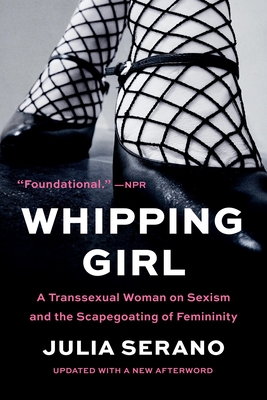
A landmark of trans and feminist nonfiction, Whipping Girl is Julia Serano’s indispensable account of …
A rallying cry to femininity as a whole, and a seminal trans text
5 stars
This is a wonderfully comprehensive transsexual manifesto across transphobia, feminism & intersectionality, experiences of transition, gender theory, academic & medical gatekeeping, cross-dressing, cisexual privilege, fetishsation, media dehumanisation, and well shit pretty much everything that impacts upon the lives of trans femmes.
Serano is thorough, precise but impassioned in her augments and gives us here an excellent foundation stone for someone seeking to broaden their understanding of these issues. Even with the time that has passed since it has been published, with updates in the forward and afterwards, the issues remain fresh and pressing.
Nectar is an erotic anthology of delicious, nourishing naughtiness, where each comic has at least …
For the horny femme in your life
5 stars
I've been meaning to get some of these for a while and finally grabbed this and Succulent at a queer book fair. They're anthologies of short trans and trans-inclusive erotic comics. This host of explicit encounters is packed with a lot of fantasy but also some contemporary stories to which are really cute. All are full of queer joy and body positivity which can really make them as heart warming as they are hot. For these and a bunch more anthologies, check out the store on discordcomics.com to find them.
I've been meaning to get some of these for a while and finally grabbed this and Succulent at a queer book fair. They're anthologies of short trans and trans-inclusive erotic comics. This host of explicit encounters is packed with a lot of fantasy but also some contemporary stories to which are really cute. All are full of queer joy and body positivity which can really make them as heart warming as they are hot. For these and a bunch more anthologies, check out the store on discordcomics.com to find them.