User Profile

Sabrina Bonfert

sabrinabonfert@bookwyrm.social

Joined 8 months, 3 weeks ago

This link opens in a pop-up window

Sabrina Bonfert's books

No books found.

Rob van Essen: Ik kom hier nog op terug (EBook, Dutch language, Atlas Contact)

Maar wat hij als een misstap beschouwt, is niet de gebeurtenis die het verleden hem …

Een fantastische reis in het verleden van een man

Als ik zou kunnen teruggaan naar de moment waar ik deze boek in een winkel in Amsterdam gekocht heb, wat zou ik anders kunnen doen? Het was en pijnlijk moment. Ik kan me nog herinneren. Ik verzamelde de boeken die ik wilde kopen in en zakje. Dat mocht niet, maar dat wist ik niet. De winkelier kwam naar me toe en vroeg me af wat ik was aan het doen. Maar ik kon hem niet verstaan, mijn Nederlands was niet goed genoeg. Ik wist niet wat hij me vroegte. Wij moesten het op het Engels gaan regelen.

Waarom kocht ik nu dit boek, ik kon niet even eens de titel verstaan. Ik weet het niet meer. Het was onder de populaire pas uitgekomen boeken. Op het boekomslag stond iets van een reis naar Los Angeles, dat leek me mooi. Als ik het maar beter zou hebben gewist, dat dit …

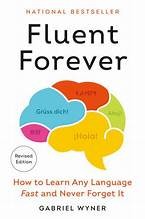
Gabriel Wyner: Fluent Forever (2024, Crown Publishing Group, The)

How to use Flashcards

The confusing title leaves a lot to the imagination, so to set expectations correctly: This book is in essence a do-it-yourself guide to language learning using the flashcards method. It provides a general overview of the science of forgetting and remembering, and it talks about proper habit forming in depth. It presents a learning journey that starts with getting to know the difference between sounds in your target language all the way to reading literature and watching TV. It also includes an introduction into phonology and the International Phonetic Alphabet for those who need it.

The bulk of the book is a guide on what kinds of flashcards to create and how to use them at which step of the learning process. It goes into great detail with countless examples and provides options for beginners, intermediate and advanced learners. True to the do-it-yourself nature of the approach, Wyner gives …

Israel Finkelstein, Neil Asher Silberman: The Bible Unearthed (Hardcover, 2001, Free Press)

The Tale of Ancient Israel and Judah

Archeologists Israel Finkelstein and Neil Asher Silberman dissect the Hebrew Bible's tales starting with the myths about the patriarchs Abraham, Isaac and Jacob and end with the reconstruction of the Temple in Jerusalem.

For each topic, they discuss the Bible's account of the events, the previous attempts of archeologists to harmonize the archeological data with the biblical account, as well as a description of the revised archeological consensus as of the publication of the book in 2001. Among the way, the authors rehabilitate kings that the Bible decried as heretics, while giving us a fascinating view of how archeological findings are combined to form our theories of ancient civilizations.

While we can reject the historicity of the Exodus and the united monarchy under King David because of the available evidence to the contrary, we do learn a lot about the real history of the divided kingdoms of Israel …

Rutger Bregman: Moral Ambition (Hardcover, 2025, loomsbury Publishing)

A mixed bag of tools to "make a difference"

Rutger Bregman writes this book for people who already feel like the world is full of problems and want to do something about it, and tells them to put their money where their mouth is. Bregman identifies two types of activism that aren't doing enough: realism that trades in ambitious goals for what can be easily done, and raw ambition of the "noble loser", whose ambition stops them from making necessary compromises or reflect on how to make their activism more productive.

The book then intends to both increase your ambition of what you can achieve, and to present what kinds of methods have worked in the past to achieve ambitious goals. Bregman wants to instill the reader with a sense that it isn't enough to have good intentions, you should not be above reviewing what about your activism works and doesn't work and change accordingly. The current problems …

Dan McClellan: The Bible Says So (Hardcover, Macmillan)

Bible scholar and popular TikToker Dan McClellan confronts misconceptions about the Bible.

The Bible …

How revelant are the moral teachings of the Bible today?

Dr. Dan McClellan is a scholar of religion with an education in Biblical Hebrew and Greek, among other things. In this book, he challenges some assumptions roaming our collective discourse about what the Bible supposedly says. We learn about what Biblical authors thought about hot-button issues of their day and today, such as monotheism, hell, abortion, slavery, homosexuality, any many more. In general, there is two kinds of myths McClellan takes on in this book.

The first, modern Christian readers of the Bible would like the Bible to have clear opinions on the culture war hot points of our day, such as abortion and eternal damnation to hell. McClellan investigates these claims according to what we have been able to reconstruct about the beliefs and rhetorical goals of the individual Biblical authors. For example, he finds that abortion is not unambiguously condemned in the Biblical text and talks about …

Gaston Dorren: Babel (Hardcover, 2018, Atlantic Monthly Press)

English is the world language, except that most of the world doesn’t speak it―only one …

A fun ride through the world's biggest languages

This book presents a handful of trivia and anecdotes for the world's 20 languages with the most speakers. It might be a showcase of Korean's onomatopoeia, Javanese's honorific system or - of course - Chinese's unique writing system. The trivia and anecdotes are something interesting, sometimes a bit boring.

This book is great if it's the first book you're reading about the world's languages, to get you interested for more language learning or linguistics. If you're already a passionate language lover, you're likely going to walk away from this book slightly disappointed that it didn't give you more thorough showcases of its languages. It's just an appetizer in that way.

I did roll my eyes a bit at describing specific language features as impossibly difficult to learn, and I hope this book doesn't encourage the kind of adversarial relationship many people have with foreign language learning. I'm glad, …

Yuval Noah Harari: Sapiens: A Brief History of Humankind (Hardcover, 2015, Harper)

From a renowned historian comes a groundbreaking narrative of humanity’s creation and evolution—a #1 international …

The path towards superhumanity?

No rating

While reading through the last chapter, I recognize that Harari is himself a victim to the myths he so often talks about in the course of the book. The final pages of the book read like an advertisement for a venture-capital funded artificial intelligence startup that promises the future, while only caring about its owner's short-term wealth accumulation.

The core thesis that you are able to take away from this book, should you choose to do so, is that human societies and connections that go beyond the simple rural village or family clan require shared myths.

Harari calls everything a "myth" that doesn't exist in nature but is man-made. Be that religious beliefs, societal roles, money, the rule of law, a belief in individuality and human rights, capitalism, communism, and everything in between.

He manages to hold a position that calls religious beliefs an arbitrary invention, while …