I loved the style of the book, but unfortunately the antagonist and the plot were too abstract for me to care for it. The book reads like a super-hero story, but conflicts and action sequences are resolved with metaphors and games of association. The stakes are supposed to be life or death at grand scale, but the rules of the game feel illusive. All of this is intentional, and wonderfully written. Unfortunately I could not get my head into the game.
Reviews and Comments
I mostly read sci-fi and fantasy in all shapes and sizes; paper, e-books and audiobooks.
This link opens in a pop-up window
Antolius rated What Doesn't Break: 4 stars
Antolius reviewed The City We Became by N. K. Jemisin (The Great Cities Duology, #1)
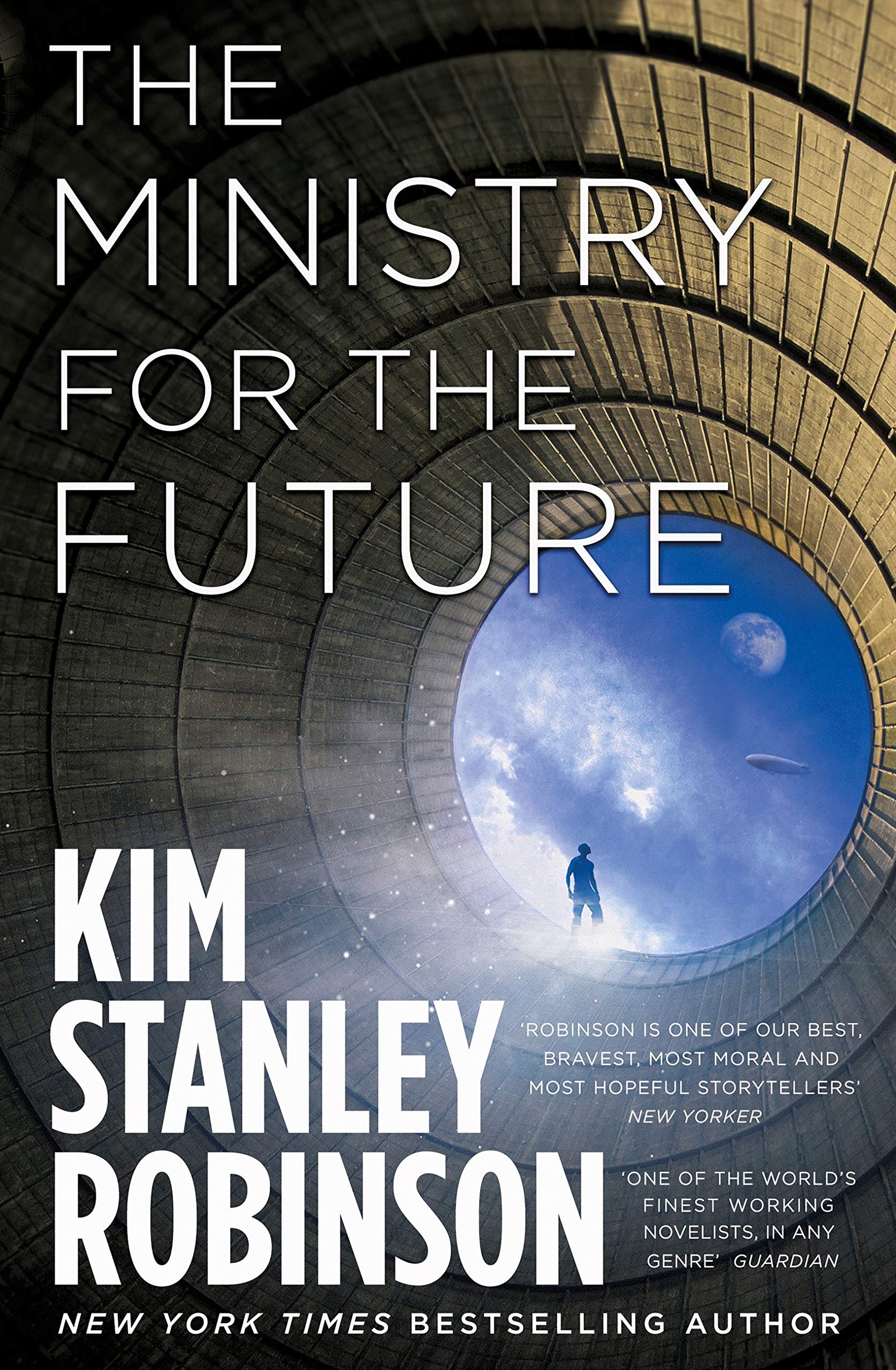
Antolius rated The Ministry for the Future: 4 stars

The Ministry for the Future by Kim Stanley Robinson, Kim Stanley Robinson
The Ministry for the Future is a cli-fi novel by American science fiction writer Kim Stanley Robinson published in 2020. …
Antolius reviewed The Shattering Peace by John Scalzi (Old Man's War, #7)
The shattered expectations
3 stars
Content warning Light spointers
I was looking forward to returning to the Old Man's War universe, but was left somewhat disappointed by this novel. I liked how it expands the lore around the Consu. The sci-fi elements of the plot were clever, and though contrived at times, the plot as a whole makes sense. I also liked where it takes the general state of affairs in the universe. The book works well as the next instalment in the broader space opera series.
When it comes to characters, Gretchen is a typical Scalzian protagonist: witty, smart, capable. Even her arrogance is justified. She more-less wins for 288 pages and then the story ends. Her perspective is fun, but as a character she feels boring.
The rest of the ensemble is comically weak at times. Characters that are supposed to be top tier professionals or superior beings end up bickering like children. It ruined the book for me. Having half of the cast, including antagonists, be total doofuses breaks the emersion.
Antolius reviewed A Prayer for the Crown-Shy by Becky Chambers (Monk and Robot, #2)
A worthy sequel, in its own way
5 stars
This novella picks up directly where A Psalm for the Wind-Built ends, but continues in a more spaced out pace. We follow Dex and Mosscap through a series of vignettes as they tour the human side of Panga, which gives Becky Chambers the opportunity to showcase more of her exquisite world building. While in the first book we learned about the history and glimpsed at a slice of human life, in this one we meet more varied communities, each with their unique spin on the prevailing hope punk aesthetic.
Unlike the first story, which relied heavily on interactions between just Dex and Mosscap, here we see them engage with different characters on their journey. In a way this dilutes the narrative; the numerous side characters are not as deeply developed, the exchanges with them not so philosophically intricate. At first I resented this difference in treatment, but by the …
This novella picks up directly where A Psalm for the Wind-Built ends, but continues in a more spaced out pace. We follow Dex and Mosscap through a series of vignettes as they tour the human side of Panga, which gives Becky Chambers the opportunity to showcase more of her exquisite world building. While in the first book we learned about the history and glimpsed at a slice of human life, in this one we meet more varied communities, each with their unique spin on the prevailing hope punk aesthetic.
Unlike the first story, which relied heavily on interactions between just Dex and Mosscap, here we see them engage with different characters on their journey. In a way this dilutes the narrative; the numerous side characters are not as deeply developed, the exchanges with them not so philosophically intricate. At first I resented this difference in treatment, but by the end of it I grew to appreciate the ways in which these interactions serve as opportunities to showcase the deepening relationship between Dex and Mosscap.
If in the first book the monk and the robot were getting to know each other, here they develop a true friendship. The structure of the two stories lines up, and this one too culminates with a conversation between the two of them hearkening back to the end of the first story. And again, they reach no answers, just some insights. There's wisdom here again, and truthiness, and a touch more feel good vibes.
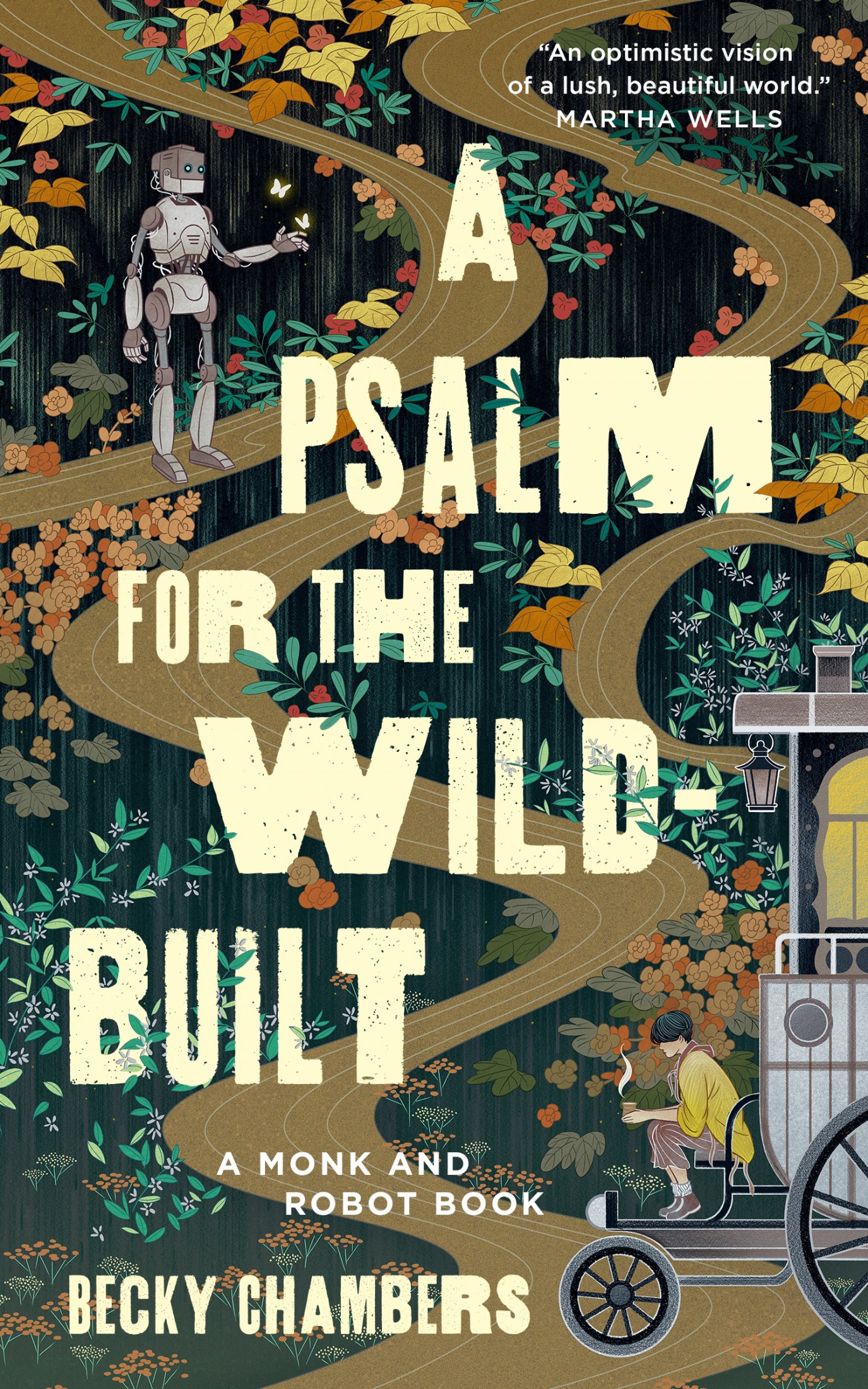
Antolius reviewed A Psalm for the Wild-Built by Becky Chambers (Monk and Robot, #1)
Beautifully true
5 stars
Thoroughly delightful respite from gloomy books I've been reading lately.
I've enjoyed Becky Chambers' work for years, and I feel she distilled it to perfection in this novella. Length-wise it is just enough to paint a picture of a beautiful solarpunk world, and to give us characterization of Dex, the main protagonist. There is nothing superfluous to it, and there is no rush either; the pace is contemplative and purposeful.
I loved the world building; the slow paced, hopeful world of Panga feels like a perfect place for me. On the other hand, it is a clever backdrop for Dex's angst and struggle to find their own purpose in life. Chambers pulls off a great feat with portrayal of Dex; they feel rich, complex and fully realized human being. Clever too is the contrast of the titular robot to Dex's monk, and the cute, often philosophical exchanges between …
Thoroughly delightful respite from gloomy books I've been reading lately.
I've enjoyed Becky Chambers' work for years, and I feel she distilled it to perfection in this novella. Length-wise it is just enough to paint a picture of a beautiful solarpunk world, and to give us characterization of Dex, the main protagonist. There is nothing superfluous to it, and there is no rush either; the pace is contemplative and purposeful.
I loved the world building; the slow paced, hopeful world of Panga feels like a perfect place for me. On the other hand, it is a clever backdrop for Dex's angst and struggle to find their own purpose in life. Chambers pulls off a great feat with portrayal of Dex; they feel rich, complex and fully realized human being. Clever too is the contrast of the titular robot to Dex's monk, and the cute, often philosophical exchanges between them.
I also liked the book's ending. It might leave things seemingly unresolved, but the story climax presents convincing argument for the value of self discovery over finding the (unattainable) solutions. In its philosophy, its character and world building, and its beauty, this story felt true to me, and that's my favorite thing.
Antolius reviewed The Dark Forest by Cixin Liu (Three-Body Trilogy, #2)
Evokes golden age Sci-Fi in some good & a few problematic ways
3 stars
I read this novel by accident. I looked it up after hearing about the dark forest hypothesis and I somehow missed the fact that this is the second book in a trilogy. I read the Three-Body Problem few years ago but didn't particularly like it. I found the same faults repeated in this novel too.
This book reads like a story from the science fiction's golden age: it has an interesting sci-fi concept at it's core, and it logically extrapolates from there. Cixin Liu does a really good job at this; at times it feels like Asimov's Foundation. Unlike the previous book, this one takes the plot into the farther future, and Liu gets to flex his creative muscle. The depiction of future cities and spaceships is well thought out and realistic. As a whole this book felt like reading through a game of chess.
Which leads me …
I read this novel by accident. I looked it up after hearing about the dark forest hypothesis and I somehow missed the fact that this is the second book in a trilogy. I read the Three-Body Problem few years ago but didn't particularly like it. I found the same faults repeated in this novel too.
This book reads like a story from the science fiction's golden age: it has an interesting sci-fi concept at it's core, and it logically extrapolates from there. Cixin Liu does a really good job at this; at times it feels like Asimov's Foundation. Unlike the previous book, this one takes the plot into the farther future, and Liu gets to flex his creative muscle. The depiction of future cities and spaceships is well thought out and realistic. As a whole this book felt like reading through a game of chess.
Which leads me to the first of my objections: characters seem robotic. Even when they cite emotion as a factor in their decision-making process, this citation itself appears as a line in a logical proof. The characters just don't read as emotional beings.
The same "logic first" approach is applied to societies at large. As plot progresses through time we see countries taking actions which would fill entire novels seemingly "by decree". This simplifications feels like something Clarke would do, to help him explore an idea without getting lost in minutia of every-day reality. Unfortunately, it is this reality that makes for a more convincing story.
While these things are excusable as valid stylistic choices, and even necessary for Liu to tell the kind of story that he wants, my final qualm does not. It relates to portrayal of female characters.
There are few of them in the novel, the most prominent one being positioned squarely as a love interest of a male protagonist. What's worse, more pages have been devoted to his fantasizing about a "perfect woman" than to her actual character. When she does eventually appear it's because she has been kidnapped and brought as a some sort of a gift for the protagonist. She has been picked for this honor predominately based on her appearance. She is there for a chapter or two, in which time she falls in love with the protagonist, and is then kidnapped yet again and held as a hostage to ensure his cooperation. He proceeds to lament this turn of events until the end of the novel, but reflects on his fantasy more often than on the actual woman.
There is one more notable female character, and she is admittedly inflicted by fewer tropes. Although she too gets manipulated by another male protagonist, begrudges him at first, but then realizes the superiority of his idea and goes along with it. She ends up thinking of him as a fatherly figure.
All this seems fine to the rest of the characters and the narrator, and that is what makes it objectionable. It's one thing for a book to critique this treatment, or to omit it entirely. But the way it is presented here just feels wrong to me.
Antolius rated Haunting of Tram Car 015: 5 stars

Haunting of Tram Car 015 by P. Djèlí Clark (Dead Djinn Universe, #0.3)
Cairo, 1912: The case started as a simple one for the Ministry of Alchemy, Enchantments and Supernatural Entities — handling …
Antolius rated Remote Control: 4 stars

Remote Control by Nnedi Okorafor
The day Fatima forgot her name, Death paid a visit. From hereon in she would be known as Sankofa―a name …
Antolius rated Witch King: 5 stars

Witch King by Martha Wells (The Rising World, #1)
Kai-Enna is the Witch King, though he hasn’t always been, and he hasn’t even always been Kai-Enna!
After being …
Antolius rated The Kaiju Preservation Society: 4 stars

The Kaiju Preservation Society by John Scalzi
When COVID-19 sweeps through New York City, Jamie Gray is stuck as a dead-end driver for food delivery apps. That …
Antolius rated Starter Villain: 3 stars

Starter Villain by John Scalzi
Inheriting your mysterious uncle's supervillain business is more complicated than you might imagine.
Sure, there are the things you'd …
Antolius rated Moon Witch, Spider King: 4 stars
Antolius rated The Ministry for the Future: 5 stars

The Ministry for the Future by Kim Stanley Robinson, Kim Stanley Robinson
Established in 2025, the purpose of the new organization was simple: To advocate for the world's future generations and to …