apposition rated Iliad Of Homer: 4 stars

Iliad Of Homer by Homer
Set in the Trojan War, the ten-year siege of Ilium by a coalition of Greek states, it tells of the …

This link opens in a pop-up window
No books found.
Set in the Trojan War, the ten-year siege of Ilium by a coalition of Greek states, it tells of the …
When the missionaries arrived at Rangihoua in 1814, they needed a form of Māori suitable for translating and teaching the Bible. A group at Cambridge University, led by the linguist Samuel Lee, with assistance from chiefs Hongi Hika and Waikato, and the missionary Thomas Kendall, developed a written form of the language. Literacy spread within the next few decades: “It was estimated that about half the adult Māori could read Māori and a third could also write it by 1859.” (34) There are thousands of documents written in Māori dating to the 19th century. These letters, newspapers, pamphlets, speeches, and petitions remain little known and poorly understood. Kinds of Peace—Keith Sinclair’s last work of history before his death in 1993—is a summary of that literature, with particular attention given to the ways in which Māori adapted to the new circumstances in which they found themselves in the world after the …
When the missionaries arrived at Rangihoua in 1814, they needed a form of Māori suitable for translating and teaching the Bible. A group at Cambridge University, led by the linguist Samuel Lee, with assistance from chiefs Hongi Hika and Waikato, and the missionary Thomas Kendall, developed a written form of the language. Literacy spread within the next few decades: “It was estimated that about half the adult Māori could read Māori and a third could also write it by 1859.” (34) There are thousands of documents written in Māori dating to the 19th century. These letters, newspapers, pamphlets, speeches, and petitions remain little known and poorly understood. Kinds of Peace—Keith Sinclair’s last work of history before his death in 1993—is a summary of that literature, with particular attention given to the ways in which Māori adapted to the new circumstances in which they found themselves in the world after the Land Wars.
Most Māori still lived on tribal land under the leadership of chiefs. These kāinga sat beyond the reach of Pākehā law, but they were not entirely insular. Māori were aware of what was happening in the rest of New Zealand. They travelled around the country and abroad and could be found working as assessors in courts, as land surveyors, storekeepers, publicans, goldminers, and gumdiggers. They crewed ships and worked in gangs to clear bush, build roads, and shear sheep. Some of the country’s first flour mills and farms were built and operated by Māori.
In 1858—the year the Kingitanga was established—the populations of Māori and Pākehā were roughly equal. Settlements were connected by river or sea and travel was difficult. A massive influx of settlers came in the 1860s and 1870s, assisted by a government immigration scheme and massive investments into public roads, railways, and telegraph lines. Growth slowed—but did not stop—during the economic depression of the 1880s, by which time the Pākehā population had already increased ten-fold. By the end of the century, there were 15 Pākehā for every Māori. Huge amounts of land—Māori land—was wanted for settlement. Private enterprise, hand-in-fist with the settler government, dispossessed Māori of their land in various ways, prompting the three strands of reaction that Keith Sinclair focuses on: the Kingītanga in Waikato; Parihaka in Taranaki; and the rūnanga of Hawkes Bay.
The Kingītanga
The country’s most dramatic fighting occurred between 1860-1863 during the invasion of the Waikato by the British army. This was the heart of the Kingītanga (King movement), formed to unite Māori against the threat of land alienation. After their defeat, large tracts of land were confiscated. An aukati was set down, a border marking where settler country ended and King Country began. King Country stretched from the Waikato River in the east to Aotea Harbour in the west. King Tawhiao of Waikato-Tainui, having lost his primary lands, based himself at Tokangamutu, near Te Kuiti, in Maniapoto territory.
European law ended at the aukati; any who crossed the border did so under the threat of death. Several Europeans were killed in the 1870s and 1880s, usually illegal surveyors. These incidents heightened fear among the settlers, who lived in war-like conditions, with every man armed and a series of blockhouses dotting the countryside. Yet nobody actually wanted another war. The government did not want to upset the steady influx of immigrants and investors, while the Kingites had no power—nor desire—to fight beyond their borders. Indeed, they were already beginning to fracture in the 1870s.
Tawhiao, who had been converted to the Pai Marire religion in 1864, established his own prophetic movement in 1876, claiming descent from King David. Knowledge of the Old Testament was widespread, and Māori often identified with the Jews of the Bible, a similarly tribal and landless people. Tawhiao preached peace, love, and faith. He identified himself with the poor and dispossessed—including Pākehā. At one time he claimed extraordinary powers: “I am the source of the flood waters and the low waters and I am the one to wipe out the things of the earth.” (47)
The government maintained only sporadic contact with the Kingītanga, often through kūpapa chiefs. The word kūpapa is now a slur, used by Māori against Māori who are deemed to be too Pākehā in thought and action, who do not have the interests of their own at heart (it’s akin to calling someone a race traitor or an Uncle Tom). I once attended a lecture in which Monty Soutar offered the following origin for the term. The literal meaning of “kūpapa” is to crouch down to the earth in a surreptitious manner. Kūpapa are those who refused to take a side when the shooting started, and instead just ducked down and hid where they were. In truth, these chiefs had a variety of motives and interests. Some fought with the government. Others stayed neutral. They were also called “friendly chiefs” or “Queenites” (as in the British Queen, as opposed to the Māori king). These terms don’t all mean exactly the same thing, but they are used more or less interchangeably to refer to chiefs who cooperated with the settler government.
Te Wheoro, a relative of King Tawhiao, was one of the most well-known friendly chiefs in his day, often serving as the government’s go-between. In 1876 he provided a lengthy account of his negotiations with the Kingites for Premier George Grey. Successive governments had sought a permanent peace with Tawhiao. They were willing to set aside some land for him, to recognise his authority, to give him a stipend, and to build a house for him. In exchange, Tawhiao had to hand over those who had killed the surveyors.
Tawhiao refused these offers. To hand over the killers would be “an abandonment of his sovereignty and an acknowledgement of the superior claims of the government and its laws.” (51) He did not want to become a pensioner. He certainly didn’t want some random block of land somewhere else: he wanted the lands across the Waikato river, lands he had once occupied, to which he had ancestral claim. But the government couldn’t accommodate this: settlers were already moving into the area of modern Hamilton, Pirongia, and Cambridge.
In 1881, Tawhiao and some 500 of his followers came into the town of Pirongia—then called Alexandra—and lay down their guns in the streets. It was a gesture of peace. Other figures in the King movement were beginning to accept government offers. Ngāti Raukawa and Ngāti Tūwharetoa allowed for land to be purchased and roads to be built. Rewi Maniapoto had a house built for him at Kihikihi, where he ran a gunshop. Manuhiri—also known as Ngapora—took a pension. Tawhiao, meanwhile, continued to reject all offers of compensation on principle. He passed away the next year.
Rūnanga and Repudiation
In theory, Māori had always had the right to vote since the establishment of self-government in 1852, but since voting was conditional on owning freehold land, and most Māori land was held in communal title, few met this qualification. In 1867, Native Minister Donald McLean introduced universal male Māori suffrage for the election of four (later five) Māori members of the House of Representatives.
The Māori members were of limited effectiveness for their first few decades. Most could not speak English to the level needed for parliamentary debate, and speeches were not translated for them. When they spoke Māori, translations into English only became available some weeks after the fact, and were of dubious quality. Some Pākehā politicians could in fact speak Māori, but they did not have a strong grasp of Māori issues, which were anyway of tertiary concern to their (Pākehā) constituents. The Pākehā members could always outvote—hence ignore—any motions put forward by the Māori members.
A vote was still a vote though, and the Māori members did sometimes play crucial roles. When Edward Stafford was returned to the Premiership in 1873, he promised a ministerial position to Wi Parata, as well as the return of confiscated lands in Taranaki. When this didn’t happen, Wi Parata crossed the house to join Julius Vogel’s vote of no confidence, ending the 3rd Stafford Ministry after only a month.
Then—as now—most Māori politics happened outside parliament, in the endless meetings held around the country in pāremata (parliaments), komiti (committees), rūnanga (a tribal assemblies), and hui (meetings, gatherings, or congregations). The idea of inter-tribal cooperation was an old one, but it came and went in different forms, and now a modern form of rūnanga was emerging as the most promising vehicle of political action. The best attested are those of the East Coast, in particular the komiti of Henare Matua, a chief from Porangahau. It had a Māori language periodical called Te Wananga which had been set up and funded by a wealthy Pākehā sympathiser, Henry Russell. Henare Matua was so influential that locals began referring court cases to him. His komiti began to issue fines, seize property, and issue land titles. Though the government shut this down, attempts were made to formally incorporate rūnanga into the structure of local government, and Henare Matua went on to become an influential figure in the Repudiation Movement.
The Repudiation Movement started in Poverty Bay in the 1850s when Māori attempted to return money paid for land in order to get it back. It sought redress and justice for unfair land sales and corrupt institutions. The rūnanga were very successful at mobilising Māori opinion. They sent dozens of petitions to parliament every year, and in 1872 the government finally agreed to establish a commission consisting of Pākehā and Māori (among which Te Wheoro) to examine over 300 complaints.
The report highlighted numerous issues with how the Native Land Court operated. It was supposed to establish who owned which blocks of land, gradually bringing Māori land under the protection of British law and facilitating its sale. Instead, it became the instrument by which Māori were dispossessed. Pākehā who wanted to buy land would apply to the Court. The Court would permit up to ten names to become holders of a piece of communal title, effectively removing the customary rights of the others. All ten had to present evidence before the court to establish title; failure of any to show could result in its forfeiture. Hearings were held in faraway European towns in the English language, which was not widely spoken among Māori in this period. Travel and lodging cost huge amounts. Lawyers and surveyors would extend them credit, but the result either way was that Māori often went into debt and had to sell their land to escape it. Interpreters, chiefs, lawyers, and surveyors were also offered commission from land sales, incentivising them to work on behalf of prospective buyers.
These findings did result in some changes to the law, but the Commission refused to pass judgement on the ethics or legality of any past sales. It had no power to do anything about those anyway, only parliament did, and then—like now—parliament could simply ignore any petitions it didn’t like.
The Native Committees Act 1883 did attempt to integrate the komiti and rūnanga into the Native Land Court by establishing seven advisory boards. The system was ineffectual. In the first place, the Court could simply ignore this advice, but the fact that there were only seven boards brought hapū into conflict with each other. The interests and claims of hapū weren’t always aligned, which meant they had to first navigate their own people onto the regional board, and only could they attempt to influence the Court’s opinion on future land sales. By then, the komiti and rūnanga had already lost most of their momentum. Henare Matua channelled his local influence into a run for the Eastern Māori electorate; he only came third. Despite their vigour and interest, rūnanga did not achieve their political objectives. They were all steam, no hāngī.
Taranaki Hardcore
The Land Wars kicked off in 1859 with the disputed sale of the Waitara block in Taranaki. Conflict flared up again in 1863 and 1868. The government crushed the “rebel” Māori and seized 1.2 million acres of land. These confiscations were indiscriminate: land was taken regardless of whether it belonged to rebels or friendlies. In the case of Ngāti Rāhiri, they complied with the government in temporarily evacuating their land; on returning home after the war, they found that it had been given away to military settlers.
Friendly Māori were supposed to be compensated with money and land set aside for reserves, but after 15 years not one dollar had been paid out. It was only in 1880, when a Royal Commission was established to investigate discontent among Taranaki Māori, that the government began to act on its promises. Their offers of compensation failed for numerous reasons. First, Māori didn’t want to relocate to random, uneconomical blocks of land far away from their actual homes. Effective government control did not exist in the area between Waingorongoro river and New Plymouth, so some of the land offered to friendly Māori was occupied by rebel Māori who weren’t going to budge. The offer of post-hoc payments for confiscated land also confused the matter. It lead Māori to believe that their former territory had been restored—why else would the government be paying them money for it? The result was a massive unlanding of Māori and the rise of two brothers at the settlement of Parihaka.
Te Whiti and Tohu established Parihaka in 1867 with the public endorsement of Te Ua Haumene, the prophet of the Pai Marire movement. Unlike the Pai Marire, the people of Parihaka did not gather around flagpoles, nor perform chants, nor pray. The brothers did acknowledge the existence of God, adopting the manner of Old Testament prophets in teaching that Māori were “the lost sheep of the House of Israel”, soon to be restored to the Promised Land by the Lord. As in the days of the Bible, Māori were oppressed, but they had a great destiny ahead of them as God’s Chosen People.
Parihaka drew in about 1,300 inhabitants from across the land, mostly Māori who had become landless. Even more came to the public meetings held every month on the 17th. Various independent written sources give us a pretty good idea of what was said there. Of the two brothers, Te Whiti was the finer orator. He often spoke in poetic language not easily understood:
Look for the fog the Darkness the smoke
Look It shall shoot forth form these
It shall not come when the sea is smooth but when its water are troubled then it shall strike the Shore
The sign of the Son of God...
(73)

Wheatcroft argues that the Habsburg aspirations to universal rule were present from the early days of the dynasty; that its members singled themselves out for greatness, even before they could be considered as such. He traces this through the art, ceremonies, celebrations, customs, beliefs, and architecture of the Habsburg realms, with special attention to medieval Spain. You could consider this book as akin in spirit to Johann Huizinga's The Autumn of the Middle Ages -- a book which Wheatcroft quotes several times -- in its attempt to build a cultural portrait of an emotionally distant past.
This all seems promising, but I found The Habsburgs an extremely dry read. There's a bit too much research -- some of it stretching back thirty years before the book's publication -- with not enough narrative to hold it all together. Though its format is chronological, Wheatcroft tends to jump back-and-forth in time with …
Wheatcroft argues that the Habsburg aspirations to universal rule were present from the early days of the dynasty; that its members singled themselves out for greatness, even before they could be considered as such. He traces this through the art, ceremonies, celebrations, customs, beliefs, and architecture of the Habsburg realms, with special attention to medieval Spain. You could consider this book as akin in spirit to Johann Huizinga's The Autumn of the Middle Ages -- a book which Wheatcroft quotes several times -- in its attempt to build a cultural portrait of an emotionally distant past.
This all seems promising, but I found The Habsburgs an extremely dry read. There's a bit too much research -- some of it stretching back thirty years before the book's publication -- with not enough narrative to hold it all together. Though its format is chronological, Wheatcroft tends to jump back-and-forth in time with very little exposition. I was pretty lost in the medieval German and Spanish bits; from Maria Theresa onwards I began to get my bearings. In any case, this is a book which presumes a high-level of background knowledge: the reforms of Maria Theresa and Joseph II only receive about a page between them, most of it a reflection on their personal attitudes. I actually think this book to short for what it attempts. Though it contains a lot of nuanced argument, the analysis is too dense to be generally accessible. I can't help but feel that this book is largely superseded by Martyn Rady's The Habsburgs (2020), which more stylishly and cohesively tackles the exact same themes of Habsburg self-image.
I did learn some surprising things. Wheatcroft contends that the regime of censorship and espionage, usually attributed to Metternich, was really the brainchild of Emperor Francis. He patterned it on the style of rule that had already been happening in the Grand Duchy of Tuscany. The extent of his repression was quite limited and ineffectual; he mostly used it as a way to track public opinion and keep the wider family in line. His bureaucracy applied the rules rather haphazardly and half-heartedly, to the extent that nobody really seemed to know what would actually disqualify a work from publication. Punishments were not usually severe. Yes, the Habsburgs were deeply conservative and slow to change; but they were equally pragmatic and willing to concede a great deal when push came to shove. As far as despotisms, theirs was of an enlightened and relatively liberal, humane sort.
The Habsburgs were quick to take up new media and technologies. They used the printing press to publish biographies and family histories. A Habsburg-sponsored encyclopaedia of the Austro-Hungarian realms prompted an enormous collation of scientific, historical, and cultural knowledge; so that ordinary people might have the chance to read it, it was serialised in the newspapers for the next 26 years. They made use of photography and mass-media, circulating photographs of the royal family in intimate moments -- coronations, births, marriages -- via postcards and stamps. Franz Joseph himself would attend the opening ceremonies of hospitals and schools in faraway towns. All of this resulted in a cult of personality surrounding the Habsburg family. This cult of personality was the only meaningful hope for a non-ethnic "Austrian nationalism" in the late 19th and early 20th centuries; it died with Franz Joseph I during the Great War, and the subsequent disintegration of the Habsburg realms.

Civilization and Its Discontents is a book by Sigmund Freud, the founder of psychoanalysis. It …
All my mania for culture… what if it’s all a form of vanity, or even worse, a little bandage over the initial wound of my origins? I have put between myself and my parents such a gulf of sophistication that it’s impossible for them to touch me now or to reach me at all. And I look back across that gulf, not with a sense of guilt or loss, but with relief and satisfaction.
Sally Rooney, Beautiful World, Where Are You?
Sometimes I’ll read a book which contains a favourable quote or reference to Sigmund Freud. It’s happened a few times now. In The Sovereignty of Good, Iris Murdoch utilised his idea of libido to reframe ethics around the person as an “egocentric” system of “quasi-mechanical energy.” (Despite popular usage of the word, “libido” is not exclusively about sex. It is any motivating energy that compels us to seek …
All my mania for culture… what if it’s all a form of vanity, or even worse, a little bandage over the initial wound of my origins? I have put between myself and my parents such a gulf of sophistication that it’s impossible for them to touch me now or to reach me at all. And I look back across that gulf, not with a sense of guilt or loss, but with relief and satisfaction.
Sally Rooney, Beautiful World, Where Are You?
Sometimes I’ll read a book which contains a favourable quote or reference to Sigmund Freud. It’s happened a few times now. In The Sovereignty of Good, Iris Murdoch utilised his idea of libido to reframe ethics around the person as an “egocentric” system of “quasi-mechanical energy.” (Despite popular usage of the word, “libido” is not exclusively about sex. It is any motivating energy that compels us to seek what we desire.) Moral philosophy, argues Murdoch, is about framing the world so we can comprehend that which is good and align ourselves towards it.Christopher Lasch, to take another example, wrote his early books around a definite Freudian nucleus. The Culture of Narcissism charges American society with cloaking the existence of the Other in the vanities of the Self. In The Minimal Self, a sequel-of-sorts, he further argued that social, political, or cultural understandings of the self had retreated under siege-like conditions, reducing the individual to a state of psychological survival.Byung-Chul Han also noted the withering of the modern individual’s sense-of-self to animal-like conditions. Tending to derive meaning from within—through conspicuous consumption or personal invention—as opposed to seeking it in external sources of validation—like cultural practice, ethnic identification, social expectation, or craftsmanlike standards of excellence—we increasingly struggle to locate ourselves within a fixed, certain reality. Our attention lies fractured across a digital landscape, with any opportunity to think, dwell, or contemplate filled in by the swarm of information. All this contributes to a pervasive sense of instability and unsettlement.Many of these ideas have an intellectual debt to Freud, whose methods—such as psychoanalysis—involve the examination and analysis of the patient’s personal history (in a pleasing coincidence, "personal history" is also a phrase that Iris Murdoch uses in The Sovereignty of Good). I often think of Freud’s characterisations of human behaviour as being not dissimilar to the way we watch a baby grow up. Before he is born, the baby is floating around in his own little swimming pool. Everything is bliss. But then comes birth. Out he comes in a great commotion. His eyes sting in the first rays of light he has ever seen. The doctor slaps him on the bum. His lungs take their first breath. A newborn baby can’t do much. He can’t walk, can’t roll over, cannot talk, can’t recognise himself in a mirror, can’t even recognise his mum’s face! Hold something out and then take it away and he has no idea it has not gone forever. Millions of years of evolution have left him only one defensive instinct: to cry out for his mother.Many of the specifics of Freud’s theories are linked to the various stages of childhood development, which take place before we can use language and cognition to systematically interrogate what we are experiencing. The way we respond to these challenges crystallises some aspect of our personality that we carry with us for the rest of our lives. For example, the baby first associates his mother with the cessation of pain and the fulfilment of desire: when he cries, she comforts him; when he needs food, she gives him a breast to suck. Slowly, he comes to learn that his mother is not just a breast or a lullaby, but a person in her own right, having a will and desires that do not always agree with his own. Coming to this realisation—learning of the mother as a distinct person in her own right—is a critical moment of self-awareness. Failure to learn this lesson is the Freudian definition of narcissism, the one Lasch borrowed for his critiques of American culture:
Selfhood presents itself, at first, as a painful separation from the surrounding environment, and this original experience of overwhelming loss becomes the basis of all subsequent experiences of alienation… (The Minimal Self, pp. 163-4)
Freud predicates most of his ideas on the assumption that we have a drive to pursue pleasure in its various forms (Lustprinzip, usually translated as “pleasure principle”). Eating food to not starve is a kind of pleasure; so is eating food for its delightful taste. Obtaining recognition from our peers (to validate our self-esteem) is another kind of pleasure. When we can’t obtain the pleasures we want, we seek out substitutes: intoxicants or religions or the pseudo-satisfaction of “surrogate activities” (the term comes from Ted Kaczynski, of all people, but I think it’s Freudian enough to fit here too). Conversely, we want to avoid suffering, of which there are many sources, including those of a social or interpersonal origin.Part of the deal of living in society is that we forego imposing our might or will on other people. Disagreements are instead regulated by appealing to common values, or through the intervention of social institutions. This requires us to repress certain instincts and impulses through internalising the taboos and expectations of society: “In this way civilization overcomes the dangerous aggressivity of the individual, by weakening him, disarming him and setting up an internal authority to watch over him, like a garrison in a conquered town.” (61)Freud’s favourite metaphor for the human person is that of the machine. A human has various drives, the pressures of which build up over time, necessitating a periodic release. We may dampen or redirect some of that energy, but where social institutions fail to achieve this, there is an occasional irruption of destructive or violent or compulsive behaviour:
Much of mankind’s struggle is taken up with the task of finding a suitable, that is to say a happy accommodation, between the claims of the individual and the mass claims of civilization. One of the problems affecting the fate of mankind is whether such an accommodation can be achieved through a particular moulding of civilization or whether the conflict is irreconciliable. (33)
Many of the specific claims of Freud’s theories open themselves up to obvious ridicule. Is obsessive-compulsive behaviour really caused by being yelled at too much when you were being toilet-trained? That, I learned, is where that meaning of the word “anal” comes from, as in a person who is a little bit too fixated on order and detail. The further you dig, the more you see Freud’s hand in everything.I get the impression that Freud wanted to unify every idea and clinical interaction he ever had into one comprehensive theory-of-mind, with not a single backwards step. This forces him into making some strange interpolations between recorded experience and theoretical prediction. Ironically, even though he was ahead of his time in attributing many psychological disturbances to upbringing or habitat (as opposed to nature or instinct), most of his actual observations of human-beings are drawn from a very limited stratum of people, namely his wealthy Viennese clientele.If we want to speak in broad themes, Freud’s work still has value in its willingness to address conflicts that seem to lie at the heart of what it means to be human. That we have conflicting desires, necessitating the division of the mind across conscious and unconscious processes, some of which are the product of our social upbringing? That’s not bad insight of a literary or philosophical kind. The specific carving-up of the brain into id, ego, and super-ego, like a diagram of cuts of meat in a butcher’s shop? That sounds more like a claim about the physical operation of the brain, and we should expect it to be amenable to scientific experiment. At his worst, Freud slips unacceptably between these two modes of rhetoric, conflating or blurring their clearly different standards of rigour. But at his best, he respects that human beings are complex, contradictory animals; that even under laboratory conditions, we resist easy classification, with our true motives inaccessible even to ourselves.You can read this review and others on my blog.

Set in post-apartheid South Africa, J. M. Coetzee’s searing novel tells the story of David Lurie, a twice divorced, 52-year-old …
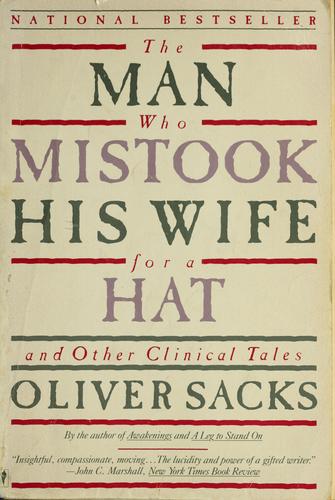
In his most extraordinary book, “one of the great clinical writers of the twentieth century” (The New York Times) recounts …
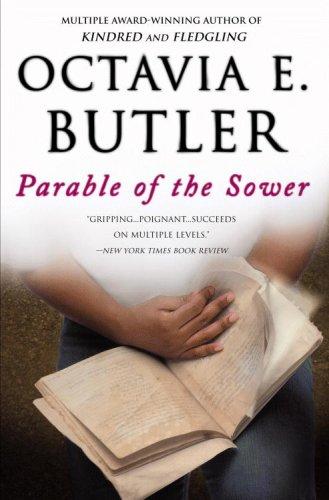
In 2025, with the world descending into madness and anarchy, one woman begins a fateful journey toward a better future.
…
Jean Guitton: Great heresies and church councils. (1971, Books for Libraries Press)
"This book provides a concise introduction to the history of South Polynesia during the period …
This is a short monograph from a series about world history in the Middle Ages. When we step away from Europe, how do the Middles Ages shape our understanding of history? Madi Williams takes this question as a jumping-off point to contrast the basic beliefs and ways of knowing in Polynesia against those in Europe. It’s a good concept for a book, but the examination is not easy-going. Polynesian cultures were pre-literate and left few archaeological records. What written accounts we do have were largely gathered by Europeans in the colonial period. They didn’t always properly contextualise what they heard and saw:
At first, Māori knowledge was accepted unquestioningly and was viewed as being true in the Western sense... early Europeans scholars placed their own units of measurement onto a different knowledge system, which led to significant inaccuracies. (27)
Ethnologists such as Percy Smith viewed oral tradition as …
This is a short monograph from a series about world history in the Middle Ages. When we step away from Europe, how do the Middles Ages shape our understanding of history? Madi Williams takes this question as a jumping-off point to contrast the basic beliefs and ways of knowing in Polynesia against those in Europe. It’s a good concept for a book, but the examination is not easy-going. Polynesian cultures were pre-literate and left few archaeological records. What written accounts we do have were largely gathered by Europeans in the colonial period. They didn’t always properly contextualise what they heard and saw:
At first, Māori knowledge was accepted unquestioningly and was viewed as being true in the Western sense... early Europeans scholars placed their own units of measurement onto a different knowledge system, which led to significant inaccuracies. (27)

What if you woke up one morning and found you’d acquired another self—a double who was almost you and yet …