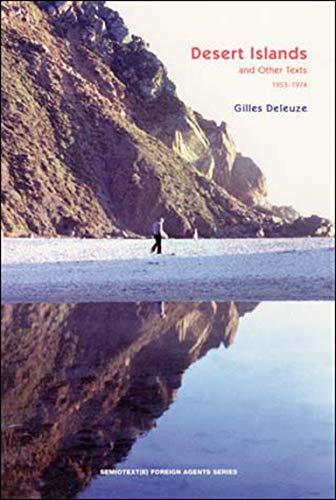
first of Deleuze's essay books I'm reading. Also have "Two Regimes of Madness", "Essays: Critical and Clinical" and also "Letters and Other Texts" (though that one's lower priority).
i kind of wish i liked essay collections better because they're so much less of a commitment than regular books, especially philosophy ones.
first of Deleuze's essay books I'm reading. Also have "Two Regimes of Madness", "Essays: Critical and Clinical" and also "Letters and Other Texts" (though that one's lower priority).
i kind of wish i liked essay collections better because they're so much less of a commitment than regular books, especially philosophy ones.
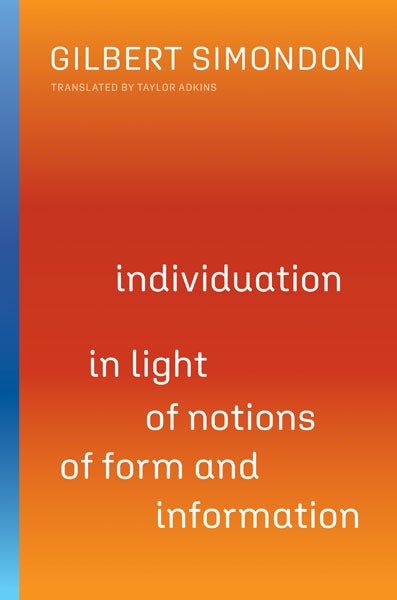
Yay, I am done. I didn't like this book very much. I'm very interested in Simondon's theory of individuation and seems like everyone else likes this book as an introduction, but it didn't do it for me. I am glad to have finished it though, now i'm probably gonna move onto a Deleuze essay collection.
Yay, I am done. I didn't like this book very much. I'm very interested in Simondon's theory of individuation and seems like everyone else likes this book as an introduction, but it didn't do it for me. I am glad to have finished it though, now i'm probably gonna move onto a Deleuze essay collection.
What do we mean when we say "I"? Can thought arise out of matter? Can …
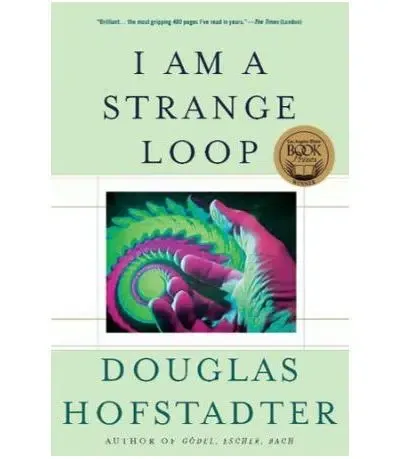
wew, finished! this is the second time i have listened to "I Am a Strange Loop." i think the book is a very good book about consciousness and i largely agree with Hofstadter's perspective that consciousness is an emergent sort of illusion. The main thing I don't like about the book is just how long it is.
I always try to keep in mind books that I consider to be introductory that would push someone to become more "like me", and "I Am a Strange Loop" is definitely one of those. It wouldn't be the first one I would recommend, but it would definitely be a recommendation. The recommendations would probably be:
Alan Watts' "The Book"
Stafford Beer's "Designing Freedom"
Humberto Maturana and Francisco Varela's "The Tree of Knowledge"
Douglas Hofstadter's "I Am a Strange Loop"
wew, finished! this is the second time i have listened to "I Am a Strange Loop." i think the book is a very good book about consciousness and i largely agree with Hofstadter's perspective that consciousness is an emergent sort of illusion. The main thing I don't like about the book is just how long it is.
I always try to keep in mind books that I consider to be introductory that would push someone to become more "like me", and "I Am a Strange Loop" is definitely one of those. It wouldn't be the first one I would recommend, but it would definitely be a recommendation. The recommendations would probably be:
Alan Watts' "The Book"
Stafford Beer's "Designing Freedom"
Humberto Maturana and Francisco Varela's "The Tree of Knowledge"
listening to Alan Watts' autobiography. I haven't read/listened to much by him, but his book "The Book" is something I recommend to a lot of people. I do find the man really interesting though and wanna know more about his life.
listening to Alan Watts' autobiography. I haven't read/listened to much by him, but his book "The Book" is something I recommend to a lot of people. I do find the man really interesting though and wanna know more about his life.
From Democritus’s atomism to Heisenberg’s uncertainty principle, from Aristotle’s reflections on the individual to Husserl’s …
Currently Muriel Combes' book on Simondon. His philosophy sounds awesome and it seems like the Geology of Morals plateau is heavily inspired by it, so definitely gonna read Simondon's magnum opus sometime.
Currently Muriel Combes' book on Simondon. His philosophy sounds awesome and it seems like the Geology of Morals plateau is heavily inspired by it, so definitely gonna read Simondon's magnum opus sometime.
Cybernetic koans? Or fairy tales for the concurrently challenged? The guru of management jests.
Glad to be finished. Beer's Wizard Prang is essentially just a bunch of short stories that are semi-humorous (tho not particularly often), about a self-insert old hindu wizard guy that often behaves nonsensically and espouses cybernetic ideas.
It doesn't feel informative enough often enough to really feel worth reading for that part and isn't satirical or funny enough to justify reading for that reason. I have finished it though and it's a weight off of me.
Glad to be finished. Beer's Wizard Prang is essentially just a bunch of short stories that are semi-humorous (tho not particularly often), about a self-insert old hindu wizard guy that often behaves nonsensically and espouses cybernetic ideas.
It doesn't feel informative enough often enough to really feel worth reading for that part and isn't satirical or funny enough to justify reading for that reason. I have finished it though and it's a weight off of me.
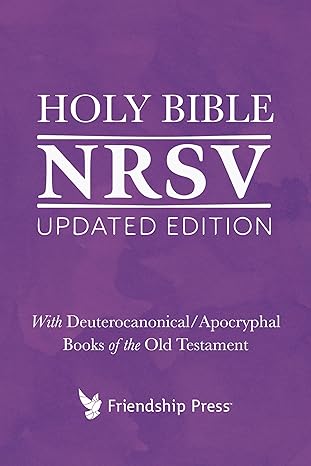
The NRSV Updated Edition Bible is intended to be the world’s most meticulously researched, rigorously …
In Exodus now. The main idea of the beginning of it is the Egyptians have enslaved and are mistreating the Israelites and god is trying to use Moses to free them. Moses keeps going to the Pharaoh to try to convince him to let them go, but god keeps hardening the Pharaoh's heart to make him reject Moses, which, in itself, is like "wtf, dude. just stop doing that, he may let ur chosen people go" and has always been a contention i've had with Exodus even when I was younger and in church. That's not what this post is about though!
After, god hardens Pharaoh's heart MULTIPLE times, god starts using Moses and his brother Aaron to unleash plagues onto Egypt to try to get the Pharaoh to let god's people go. Pharaoh has his own magicians that copy the plagues that Moses enacts, i guess to show …
In Exodus now. The main idea of the beginning of it is the Egyptians have enslaved and are mistreating the Israelites and god is trying to use Moses to free them. Moses keeps going to the Pharaoh to try to convince him to let them go, but god keeps hardening the Pharaoh's heart to make him reject Moses, which, in itself, is like "wtf, dude. just stop doing that, he may let ur chosen people go" and has always been a contention i've had with Exodus even when I was younger and in church. That's not what this post is about though!
After, god hardens Pharaoh's heart MULTIPLE times, god starts using Moses and his brother Aaron to unleash plagues onto Egypt to try to get the Pharaoh to let god's people go. Pharaoh has his own magicians that copy the plagues that Moses enacts, i guess to show that god isn't more powerful than Pharaoh.
So these magicians can both turn water into blood and spawn frogs, but they can't spawn gnats. Of those three things, you'd think that would be the easiest and not too different from spawning frogs.
Tbh, I kinda hate this book. People talk about the bible as if it's like this wonderful piece of literature, but i'm not really seeing it. also, i can't imagine believing it or trying to take messages from it.
Cybernetic koans? Or fairy tales for the concurrently challenged? The guru of management jests.
Series of nonsensical stories about a Wizard named Prang (it is British Air Force slang), by the Cyberneticist Stafford Beer. It is something I'm currently working and seems like a relatively easy read.
Series of nonsensical stories about a Wizard named Prang (it is British Air Force slang), by the Cyberneticist Stafford Beer. It is something I'm currently working and seems like a relatively easy read.
"A philosophical statement whose explicit intention is to sweep away as both false and dangerous …
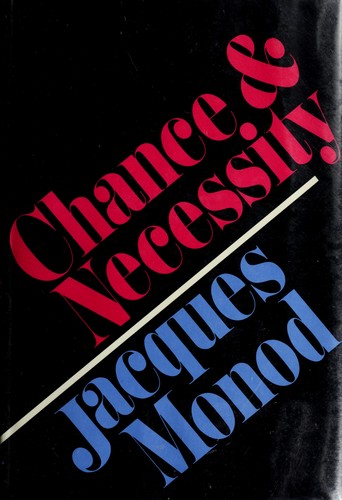
Kind of a slog. It's a book from the 70s about the relationship of chance and necessity, especially in terms of molecular biology (but also human cognitive development/language).
I wouldn't really recommend reading this book. Philosophically it's not particularly interesting. If you're interested in someone trying to connect random, probabilistic processes and ordered, regular processes I would recommend the essay "Chance and Necessity" from Lewontin and Levins' "Biology Under the Influence".
It also sometimes uses the language of cybernetics and my favorite part of the book was when it was talking about chains of enzymatic reactions and the way that they can be self-perputating, self-denying, or multiple chains can be co-producing. Even so, I don't think this book is the best place to begin if you're interested in Cybernetics. I would recommend Stafford Beer's "Designing Freedom" and also, in terms of bio-cybernetics, Maturana and Varela's "The Tree of …
Kind of a slog. It's a book from the 70s about the relationship of chance and necessity, especially in terms of molecular biology (but also human cognitive development/language).
I wouldn't really recommend reading this book. Philosophically it's not particularly interesting. If you're interested in someone trying to connect random, probabilistic processes and ordered, regular processes I would recommend the essay "Chance and Necessity" from Lewontin and Levins' "Biology Under the Influence".
It also sometimes uses the language of cybernetics and my favorite part of the book was when it was talking about chains of enzymatic reactions and the way that they can be self-perputating, self-denying, or multiple chains can be co-producing. Even so, I don't think this book is the best place to begin if you're interested in Cybernetics. I would recommend Stafford Beer's "Designing Freedom" and also, in terms of bio-cybernetics, Maturana and Varela's "The Tree of Knowledge."
I also definitely wouldn't read this book for information on molecular biology. I'm not an expert on that front, but a lot of details of how cellular machinery operates that were present in the epigenetics book I read recently were missing from here (understandably so because this book is 50 years old) and there were a few instances that seemed like there was wrong information.
The book also approvingly mentioned Chomsky's universal grammar concept which claims that there are evolutionary ingrained rules for language in the brain that allows children to acquire languages. At the time it was probably highly regarded as a theory but has fallen out of favor as non-European languages have been brought more into the conversation and the way children learn languages has been evaulated.
It's kind of funny that I can write more about this book that I didn't like very much than I could about any book I enjoyed lol.