

Recipe books teach us nothing about how to cook. Foodie books break down what makes dishes work but sometimes lack a soul, or perspective on what is practical and available to the average person. This book teaches how to cook in a way that honors the actual shape of life. You may know all about salt, fat, acid, and heat already. But this book turns the basics into poetry that motivates happiness in the kitchen, and gives practical advice (and yes, a few recipes) on how to actually build skill practically, as well as build intuition that turns staples into magic. Importantly, as serious as the book takes food and cooking, the book is centered around humble ingredients first. Greens, generically, rather than an insistence you need to procure a certain kind of chard. Eggs. Rice. Beans. Basic meats anyone can buy. There is emphasis on quality, true. But this …
User Profile

Hello! I am a 32 year old biologist-turned-mechanic-turned...Dilettante? Autodidact but-on-purpose-this-time? Regardless. Here to track my reading and hopefully read interesting perspectives on books/ideas from other humans. Interested in a little bit of everything, but skewed toward Russian lit, Steinbeck, Romantics, Gothics, etc. I enjoy stories about labor, self-deception, confronting nihilism, the edges of the uncanny. Considering a full back tattoo of The Knight of Infinite Resignation.
This link opens in a pop-up window
GildedGrouse's books
To Read (View all 31)


Currently Reading

User Activity
RSS feed Back
GildedGrouse wants to read We have never been modern by Bruno Latour
GildedGrouse reviewed An Everlasting Meal by Tamar Adler

How to actually cook
5 stars
Recipe books teach us nothing about how to cook. Foodie books break down what makes dishes work but sometimes lack a soul, or perspective on what is practical and available to the average person. This book teaches how to cook in a way that honors the actual shape of life. You may know all about salt, fat, acid, and heat already. But this book turns the basics into poetry that motivates happiness in the kitchen, and gives practical advice (and yes, a few recipes) on how to actually build skill practically, as well as build intuition that turns staples into magic. Importantly, as serious as the book takes food and cooking, the book is centered around humble ingredients first. Greens, generically, rather than an insistence you need to procure a certain kind of chard. Eggs. Rice. Beans. Basic meats anyone can buy. There is emphasis on quality, true. But this is freedom, for me. It's fine to serve a simple poached egg on toast because I have used good parmesan, and so on. The prose might seem pretentious, but the dishes are not. I love that.
Personally, at risk of sounding like a recipe blog, this was transformative. My mother cooked plenty of food I loved. But she is risk-adverse. A cookbook gal. I imagine she might struggle a bit if handed a small pantry of drab basics and no guidelines. This book has practical instruction on what to do with the basics, sure. But it also made me feel very good about carrying those basics confidently forward. If you are used to foodie umami bombs or urbane chicken nuggets, you might not think her suggestion to boil whatever vegetable "until delicious" is appealing, but please. Just try.
GildedGrouse reviewed The Double by Fyodor Dostoevsky

Most significant of the Russian novelist's early stories (1846) offers straight-faced treatment of hallucinatory theme. …
Incredible.
5 stars
I had force myself through the first read and then immediately went back to read it a second time. Did I learn anything about the narrative the second time 'round, or get to look on the mysteries as one who knows the answers? Absolutely not. That is what makes this book so masterful. It's dizzying. It is difficult to read because the Golyadkin is a bit mad, going fully insane. He repeats himself, contradicts himself, and tries to explain things that even if you read them 5 times, would never really make perfect sense. That makes it a bit of an exhausting read, but it is so very worth it.
The genius here is not that it has a twist reveal- it doesn't. It isn't that it doesn't provide answers to small mysteries imbedded in an otherwise sensical narrative- the whole narrative is potentially nonsensical so no mystery is …
I had force myself through the first read and then immediately went back to read it a second time. Did I learn anything about the narrative the second time 'round, or get to look on the mysteries as one who knows the answers? Absolutely not. That is what makes this book so masterful. It's dizzying. It is difficult to read because the Golyadkin is a bit mad, going fully insane. He repeats himself, contradicts himself, and tries to explain things that even if you read them 5 times, would never really make perfect sense. That makes it a bit of an exhausting read, but it is so very worth it.
The genius here is not that it has a twist reveal- it doesn't. It isn't that it doesn't provide answers to small mysteries imbedded in an otherwise sensical narrative- the whole narrative is potentially nonsensical so no mystery is small. Every time you think "Ah, here is a moment that confirms what reality is" you find yourself realizing that is not the case. Golyadkin sees hostility when there is polite neutrality or even kindness, sees kindness where there is cruelty, but even we the reader cannot always tell which is which. No moment of the book feels particularly weak, but the best moments are absolutely incredible. The book runs on dream logic and time. Some things happen too quickly, some too slowly. Sometimes you will make a mental list of what might be happening only to find out it doesn't matter, or ignore something that winds up coming back up as important. You are carried along with Golyadkin. He is not simply an unreliable narrator whose account we can adjust toward truth by understanding his perception and agenda. No such thing is possible here.
You can say quite a lot about what Dostoevsky thinks about Petersburg society. You can say quite a lot about how Golyadkin sees himself, presents himself, and sees others. You can say a lot about what might have saved him or damned him. You can decide what that means for morality, obligation. You cannot really say what, exactly, has occurred in reality in this book. Unlike many cute-twist or shock value madness narratives, what actually occurs is completely beside the point of what Dostoevsky is saying about people or his characters. But the dizzying mystery of it makes the read compelling the first go round, then we can pay attention to what it means the second time. At no point, however, will you really know what happened. Beautiful.
GildedGrouse reviewed Notes from Underground by Fyodor Dostoevsky

Notes from Underground (pre-reform Russian: Записки изъ подполья; post-reform Russian: Записки из подполья, tr. Zapíski …
Harrowing
4 stars
This, like The Double, is rather difficult to read. Listening to someone rant and feeling the color of their mood more than the precision (or lack thereof) is one thing. READING it is another entirely. It's tiring. It's also extremely funny and sad. It's such a singular experience and I'm so exhausted by it I do not know what to say about the text exactly. Plenty of scholars have much better things to say about the text than I do. I can say that I think nearly any intelligent angsty person should read it, so you can see in the mirror and cry/laugh at yourself.
This, like The Double, is rather difficult to read. Listening to someone rant and feeling the color of their mood more than the precision (or lack thereof) is one thing. READING it is another entirely. It's tiring. It's also extremely funny and sad. It's such a singular experience and I'm so exhausted by it I do not know what to say about the text exactly. Plenty of scholars have much better things to say about the text than I do. I can say that I think nearly any intelligent angsty person should read it, so you can see in the mirror and cry/laugh at yourself.
GildedGrouse reviewed The Buried Giant by Kazuo Ishiguro

The Buried Giant begins as a couple set off across a troubled land of mist …
Dreamlike, a little dull, powerful payoff
3 stars
I generally love Ishiguro but I found this one...odd. The tone is very distant and much more stilted than his other, very intimate, works. It's probably intentional: the half-historical half-fantastical setting feels like a fable so it makes sense to tell it at a distance like one. This also works with the themes of pain and forgetting on both a small and a grand scale. If everything is shrouded in a fog of forgetfulness, why would it feel intimate and real? So, coherent style choice but if you have an itch for Ishiguro's best works' tone, this isn't going to scratch it.
There are two stories going on here which explore the same idea at a different scale: forgetting wrongdoings in a marriage and forgetting pain on a broad cultural level. The way feelings linger even when the event is forgotten. Etc. That's all very rich. Unfortunately, despite being …
I generally love Ishiguro but I found this one...odd. The tone is very distant and much more stilted than his other, very intimate, works. It's probably intentional: the half-historical half-fantastical setting feels like a fable so it makes sense to tell it at a distance like one. This also works with the themes of pain and forgetting on both a small and a grand scale. If everything is shrouded in a fog of forgetfulness, why would it feel intimate and real? So, coherent style choice but if you have an itch for Ishiguro's best works' tone, this isn't going to scratch it.
There are two stories going on here which explore the same idea at a different scale: forgetting wrongdoings in a marriage and forgetting pain on a broad cultural level. The way feelings linger even when the event is forgotten. Etc. That's all very rich. Unfortunately, despite being short, I often felt bored. The final scenes, however, have a heart-wrenching payoff so good that I can admit I have, ironically, forgotten the sting of the dull bits.
GildedGrouse reviewed On Beauty and Being Just. by Elaine Scarry

I love it, but only sort of
2 stars
I have read, DNF'd, reread, finished, reread, DNF'd, and so on this short little book for over a decade after being assigned it in an ethics class. So, I guess it is important to me. The first part of the book moves me greatly, the way she describes beauty isn't exactly a definition, but is a feeling that is meaningful to me and have carried with me in my own meanderings on the subject. The second part of the book spends WAY too much ink on a certain painter, and fails to take the moving ideas of the first part to a strong conclusion. I always say everyone should read it. I should read it again. But I guess what I really mean is I should read the first couple chapters again.
It's a bit more of a vibes meditation on beauty. And I do agree that there is …
I have read, DNF'd, reread, finished, reread, DNF'd, and so on this short little book for over a decade after being assigned it in an ethics class. So, I guess it is important to me. The first part of the book moves me greatly, the way she describes beauty isn't exactly a definition, but is a feeling that is meaningful to me and have carried with me in my own meanderings on the subject. The second part of the book spends WAY too much ink on a certain painter, and fails to take the moving ideas of the first part to a strong conclusion. I always say everyone should read it. I should read it again. But I guess what I really mean is I should read the first couple chapters again.
It's a bit more of a vibes meditation on beauty. And I do agree that there is something worthwhile in beauty, in being moved, in appreciating the world that goes beyond pastime and approaches a sort of ideal Good. I just don't think Scarry gives a solid enough argument in the end. It feels much less rigorous than The Body in Pain.
Embarrassing for me and Scarry, I can say the bits of the book that stuck with me most were actually quotes from other thinkers. Oops.
GildedGrouse reviewed The Remains of the Day by Kazuo Ishiguro

The Remains of the Day is the profoundly compelling portrait of Stevens, the perfect butler, …
A Favorite
5 stars
I love this book. I'm biased. Sue me.
Obviously the big deal here is Stephens' self deception. At no point is it subtle to the reader, of course. What I didn't expect is how warmly funny the book is. Despite there being immense pain in the book, it reads less like a broken-hearted ledger of regret and more a calm, pleasant dawning. This obviously isn't the only Ishiguro book about duty vs. morality and self-deception. But it is extremely engaging from the outset. Stephens' narration is colorful, a man lost not in sadness or madness but in quite witty turns of formality. The seriousness of the situation is then washed with a sort of quaint nostalgia. This is interesting: we aren't asked to condone his employer's politics nor heavily classist British high society. But the sense of loss of that world is palpable and bittersweet. The most painful moments …
I love this book. I'm biased. Sue me.
Obviously the big deal here is Stephens' self deception. At no point is it subtle to the reader, of course. What I didn't expect is how warmly funny the book is. Despite there being immense pain in the book, it reads less like a broken-hearted ledger of regret and more a calm, pleasant dawning. This obviously isn't the only Ishiguro book about duty vs. morality and self-deception. But it is extremely engaging from the outset. Stephens' narration is colorful, a man lost not in sadness or madness but in quite witty turns of formality. The seriousness of the situation is then washed with a sort of quaint nostalgia. This is interesting: we aren't asked to condone his employer's politics nor heavily classist British high society. But the sense of loss of that world is palpable and bittersweet. The most painful moments are deeply personal, and I expect many can relate to them.
GildedGrouse reviewed The Beetle by Richard Marsh

The Beetle, written in 1897 by British author Richard Marsh, is a classic gothic horror …
Extremely fun, if dated.
4 stars
I decided to read this since it was published the same year as Dracula and outsold it. It is also invasion horror. Compared to Dracula, it is much more obviously coming from a place of colonial anxiety. That is, it carries the Orientalism and sexual anxiety of its time. If you can't stand a "racist" book, avoid. If you find Victorian anxieties more interesting than offensive, it is a good read for historical sociology.
Personally, I just read it because I wanted to read an old spooky adventure. In that department, Marsh delivers. The prose is simple, but often funny. Multiple perspective characters with incomplete information help and hinder one another. The tension holds the entire time, first as "what?" then as a long-unanswered "why?". Once we get the "why" we are swept into a nice final chase. Very fun. I can see why it outsold Dracula- it is …
I decided to read this since it was published the same year as Dracula and outsold it. It is also invasion horror. Compared to Dracula, it is much more obviously coming from a place of colonial anxiety. That is, it carries the Orientalism and sexual anxiety of its time. If you can't stand a "racist" book, avoid. If you find Victorian anxieties more interesting than offensive, it is a good read for historical sociology.
Personally, I just read it because I wanted to read an old spooky adventure. In that department, Marsh delivers. The prose is simple, but often funny. Multiple perspective characters with incomplete information help and hinder one another. The tension holds the entire time, first as "what?" then as a long-unanswered "why?". Once we get the "why" we are swept into a nice final chase. Very fun. I can see why it outsold Dracula- it is an easy read and the tension and confusion are present almost until the end.
I do think, regardless of how uninteresting old Orientalism can be (we have all seen it a million times!), the gender dynamics in the book are very interesting. The titular horror itself is horrifying (to a Victorian audience) partially due to gendered expectations and subversion. More satisfying to my modern mind, the male perspective characters are all petty, posturing, even immoral. The female perspective character of course gets her damsel-in-distress moment, but she is intelligent and has serious agency.
Come for the fun old-school horror adventure, stay for the comedy-of-manners moments and awesome lady characters.
GildedGrouse reviewed Tender Is the Flesh by Agustina Bazterrica
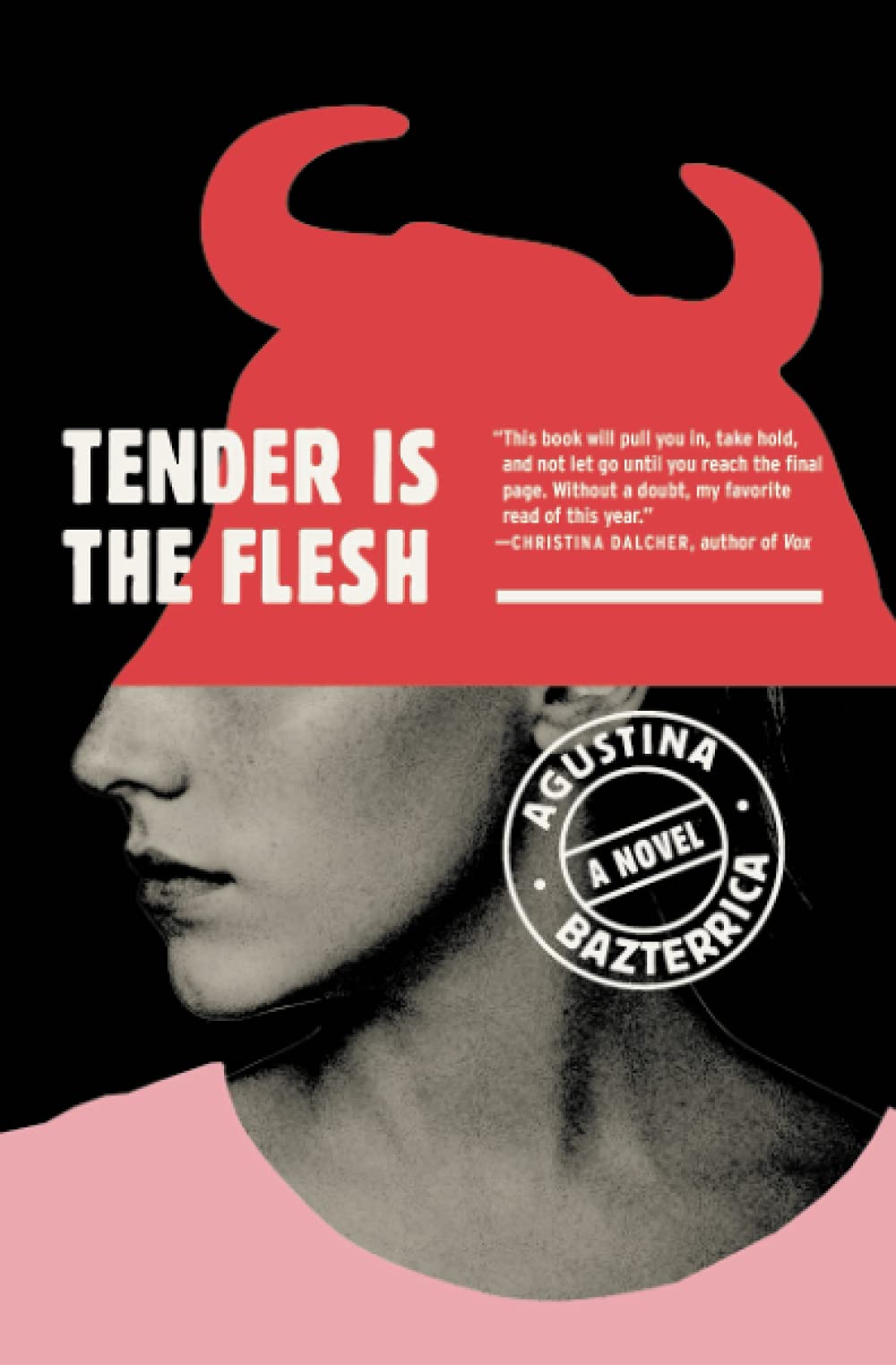
Working at the local processing plant, Marcos is in the business of slaughtering humans —though …
Unsubtle Allegory, Surprising What Stings
4 stars
I really whipped through this one. I'm perhaps a little too into cannibal media and familiar with people-as-livestock ideas. So, much of the book was shocking to see in mainstream print, but not terribly shocking in itself. Whatever shock there is wears of pretty fast, honestly. Nearly every scene with a new character is a nearly 1:1 satire of a specific form of exploitation in real life. So while it is really ham-fisted in that sense, I enjoy it and think it is worth thinking about. Certainly gives one some rhetorical ammo, I suppose. The final little morality play involving shipping is the most cutting in the book.
The more deeply unsettling things in the book were, for me, not remotely related to bashing humans over the head and carving them up for supper. The domesticity in the book is more chilling than anything violent or sexual, and brings …
I really whipped through this one. I'm perhaps a little too into cannibal media and familiar with people-as-livestock ideas. So, much of the book was shocking to see in mainstream print, but not terribly shocking in itself. Whatever shock there is wears of pretty fast, honestly. Nearly every scene with a new character is a nearly 1:1 satire of a specific form of exploitation in real life. So while it is really ham-fisted in that sense, I enjoy it and think it is worth thinking about. Certainly gives one some rhetorical ammo, I suppose. The final little morality play involving shipping is the most cutting in the book.
The more deeply unsettling things in the book were, for me, not remotely related to bashing humans over the head and carving them up for supper. The domesticity in the book is more chilling than anything violent or sexual, and brings up more interesting questions than the 1:1 allegories. It's easy to reduce the domestic playacting as a personal defeat of Marcos trust in humanity. It's more interesting to imagine it as more consequential. The most unique idea in the book, and the one that ached the hardest wasn't about humans at all (and no, it's not about THAT scene at the zoo either). The simple erasure of animals not just as pets and livestock, but even as children's toys haunts me far more than anything else in the work.
I do have some minor criticisms about the worldbuilding, there are a few things about "the stock" that are not really consistent. Perhaps this is dissonance between Marcos beliefs and observed reality, but I think there are just slightly sloppy writing.
GildedGrouse reviewed Bunny by Mona Awad (Bunny, #1)

Samantha Heather Mackey couldn't be more of an outsider in her small, highly selective MFA …
Worth a read, didn't blow my mind.
3 stars
Satire of arts Academia meets Heathers. Perspective character is a poor-kid outsider to her glittering rich-girl classmates so you can likely decide for yourself if that mixture of sometimes justified, sometimes self-sabotaging resentment and self-pity is going to grind your gears or not. I enjoyed the hyperbolic descriptions of her classmates, I enjoyed the gory horror twist to their antics. The book is not unpredictable and I didn't find it particularly tense. I enjoyed it well enough.
I don't think this book makes particularly strong statements about Academia, femininity, or whatever else it is supposed to be about. It's more an atmosphere of satire than a satire with a point. I found myself thinking that was pretty fun and hilarious in the beginning quarter, then found myself getting quite bored for the last quarter of the book. For the middle quarters, some of the imagery and weirdness kept me …
Satire of arts Academia meets Heathers. Perspective character is a poor-kid outsider to her glittering rich-girl classmates so you can likely decide for yourself if that mixture of sometimes justified, sometimes self-sabotaging resentment and self-pity is going to grind your gears or not. I enjoyed the hyperbolic descriptions of her classmates, I enjoyed the gory horror twist to their antics. The book is not unpredictable and I didn't find it particularly tense. I enjoyed it well enough.
I don't think this book makes particularly strong statements about Academia, femininity, or whatever else it is supposed to be about. It's more an atmosphere of satire than a satire with a point. I found myself thinking that was pretty fun and hilarious in the beginning quarter, then found myself getting quite bored for the last quarter of the book. For the middle quarters, some of the imagery and weirdness kept me going. I was not particularly invested in the main character, and sadly didn't find her interesting. So although I think she is "important" in many scenes, pages that focus on her alone are often really dull. There is little to like about Samantha and her friend, and they do not like her classmates. So fascination with the classmates is really the only thing I had to enjoy about anyone's actions in the book. Not everything has to have some tremendous point, but there are characters and tensions that feel really half-finished. So, at times it feels brilliantly funny, at other times it is uncomfortable not for its horrors but for weird banal entanglements. This book leaves a lot of things unanswered, but not in a way I think really adds any depth to it.
Speaking of unanswered, there is a lot of interpretation going around about Samantha's mental state and the reality or unreality of the events in the book. I caution against taking a firm stance on this. This is one of the things the book actually does well, though in a fairly simple way. The book is totally coherent at face value, if you assume the events are literal and real. The book is also totally coherent if you assume nearly nothing happening is real. The book doesn't itself bring up the question of unreality, but many readers have. I don't think this is masterful in the way many books specifically about delusion (The Double) are, but I enjoy that the story works either way and doesn't really insist on a twist (Fight Club). I do think assumptions of delusion flatten the book massively, even if a literal interpretation is ridiculous. I think the book is best enjoyed NOT trying to be clever about every little thing Awad writes, because frankly I don't think everything she wrote here was that clever.