Reviews and Comments

Andrew Goldstone

agoldst@bookwyrm.social

Joined 2 years ago

This link opens in a pop-up window

Albert Bates Lord: The singer of tales (2000, Harvard University Press) No rating

Actually I read the digital version of this second edition, which, along with a remarkable library of other titles in Classics, is available free from the Center for Hellenic Studies. Greg Nagy's books are (all?) there: don't miss Comparative Studies in Greek and Indic Meter!

Anyway, Lord/Parry is one of those books I've imbibed the general idea of from references in other books (like Nagy's, or Watkins's How to Kill a Dragon). In short, oral epic composition is based on the use of "formulas" (meaning, generative templates that fit the meter). Observing and recording Yugoslavian epic singers at first hand, the authors believed they were witnessing the very same process that produced the Iliad and the Odyssey (and, Lord adds, many other European/Near Eastern epics from Gilgamesh to Beowulf). At the level of comparative poetics, what is most powerful is the argument that, through the mechanism …

finished reading The inflationary universe by Alan H. Guth

Alan H. Guth: The inflationary universe (1997, Addison-Wesley Publishing)

Awake in the middle of the night and needing something emphatically not related to literature to read, I pulled this book off my shelf, which had migrated there from my parents' shelves. The author is a family friend, so the form of this book, which combines explanation-for-laypeople with memoir, is entertaining for me. Guth's infant son (infant at the time of the discoveries he recounts) is a recurrent character—but to me Larry is the impossibly accomplished older fellow faculty brat. (My dad also has a couple of cameo appearances, including one astonishing scene in which he is on the other end of the phone when Guth called up MIT to suggest they should make him a job offer. That was a different world.) This is popular science narrative in which the protagonists are actual people whose collaborations are threaded with snark and competition, and who are sometimes pulled back to …

finished reading Manhattan Transfer by John Dos Passos

John Dos Passos: Manhattan Transfer

Manhattan Transfer is an American novel by John Dos Passos published in 1925. It focuses …

At some point I decided it was safe to mix a little modernism into my recreational reading diet now and then, figuring that my research is now far enough from modernism that it won't normally make me start anxiously thinking about whether I need to address it professionally. On the one hand, this didn't give me agità. On the other hand, meh. Enjoyed the downtown local color, but not so much the sense of reading a second-tier Sister Carrie rendered in montage. Brief glimpse of deported reds singing the Internationale is relevant, I guess.

finished reading Rogue protocol by Martha Wells (The Murderbot Diaries, #3)

Martha Wells: Rogue protocol (2018, TOR)

"Sci-Fi's favorite antisocial AI is back on a mission. The case against the too-big-to-fail GrayChris …

I went on from Asimov to this robot story (at least Wells doesn't suffer from engineer-ism). It's fine, though the TV-episode-formula quality has intensified. I already can't remember any of the human characters. There are bad ones and good ones, and Murderbot saves the good ones from the bad ones.

(I always make up the "finished reading" dates. This isn't a performance chart.)

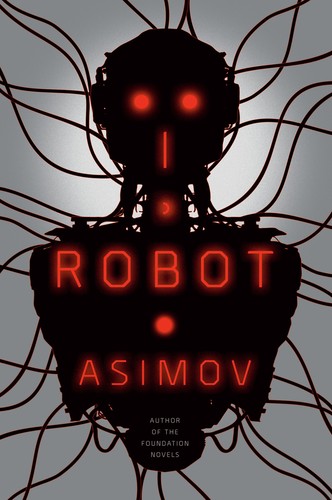
finished reading I, Robot by Isaac Asimov (Robot (1))

Isaac Asimov: I, Robot (Paperback, 2004, Simon & Schuster)

This classic science fiction masterwork by Isaac Asimov weaves stories about robots, humanity, and the …

I needed something bite-sized to read and for some reason drifted over to this, bought ten years ago. I'd never actually read it all: I've taught "Reason" and "Runaround" many times, but this time I soldiered through the whole thing, including the frame story about Susan Calvin. Those early stories are far, far better than any that came later—funnier, more surprising, unencumbered by the "Three Laws" as the main object of interest (which is a problem because they're not interesting). There's something heroic about Asimov attempting to make Susan Calvin into a character, but she's just a cardboard cut-out of the Brainy Woman.

As for the Three Laws, it's truly bizarre that they have had such staying power. I guess people really want to confound "is" and "ought": Asimov wants you to imagine robots as beings for whom moral imperatives really are natural laws. As a corollary, engineers (and …

Michael Mann: The sources of social power (2012)

Well, here we are

No rating

Sometime last month-ish, I finished the last volume of Mann's tetralogy. Want to write at more length about it. Interesting to see that the decline of the US as the global superpower was absolutely clear to Mann by 2012, following Bush-era imperial overreach and the Great Recession (which he aptly calls "The Great Neoliberal Recession"). Now I think no one is in any doubt about that. Mann's bleak assessment of the prospects for moderating climate change--as he says, a product of ALL the sources of social power, economic, political, military, and ideological--is compelling, and, of course, the prognosis has only worsened with the last decade.

Perhaps most useful for The Times We Live In is Mann's emphasis on "politicized capitalism" ("access to the state confer[s] possession of private corporations") as the typical outcome of neoliberal reforms in Latin America, East Asia, and Russia. And now also, we can add, …

finished reading Artificial Condition by Martha Wells (The Murderbot Diaries, #2)

Martha Wells: Artificial Condition (Hardcover, 2018, Tor)

Artificial Condition is the follow-up to Martha Wells’s Hugo, Nebula, Alex, and Locus Award-winning, New …

Like watching TV at bedtime without the sleep-disrupting effect of the screen. Perfectly amusing in its predictable way. It is a fairly pure example of the space Western---Mbot as loner cowboy rides into a frontier town and helps out some sweet kids in trouble with the local gang boss. Back in the days of Galaxy Magazine this kind of thing was an object of mockery, but it serves the purpose still. Looks like it's Fantasy-of-redemptive-violence-carried-out-by-an-antisocial-but-fundamentally-decent-oddball o'clock again.

Michael Mann: The Sources of Social Power (Paperback, 2012, Cambridge University Press)

"several weaknesses piled on top of each other"

No rating

Continuing on with Mann's history of it all. He seems to have finished vols. 3 and 4 simultaneously but divided up the resulting Monster Fun Book into two, sort of like Brendan Sanderson partitioning the last Wheel of Time, except the patriarchal authoritarians with the messianic ideology don't win in Mann's 1890–1945 story. Ha ha! I am funny!

Mann continues to be lovely to read, though in going through this volume I kept finding myself saying "ruh-roh" as some element of the fascist ascent that had an obvious parallel in our time fell into place. Mann is darkly convincing about fascism as a distinctive, and distinctively effective, modern phenomenon, which came with a compelling ideology of renewal, dealt ruthlessly and successfully with its political opponents (including the old-regime conservatives who thought they could manipulate the fascists), and used militarism effectively both in war and as an economic policy. In …

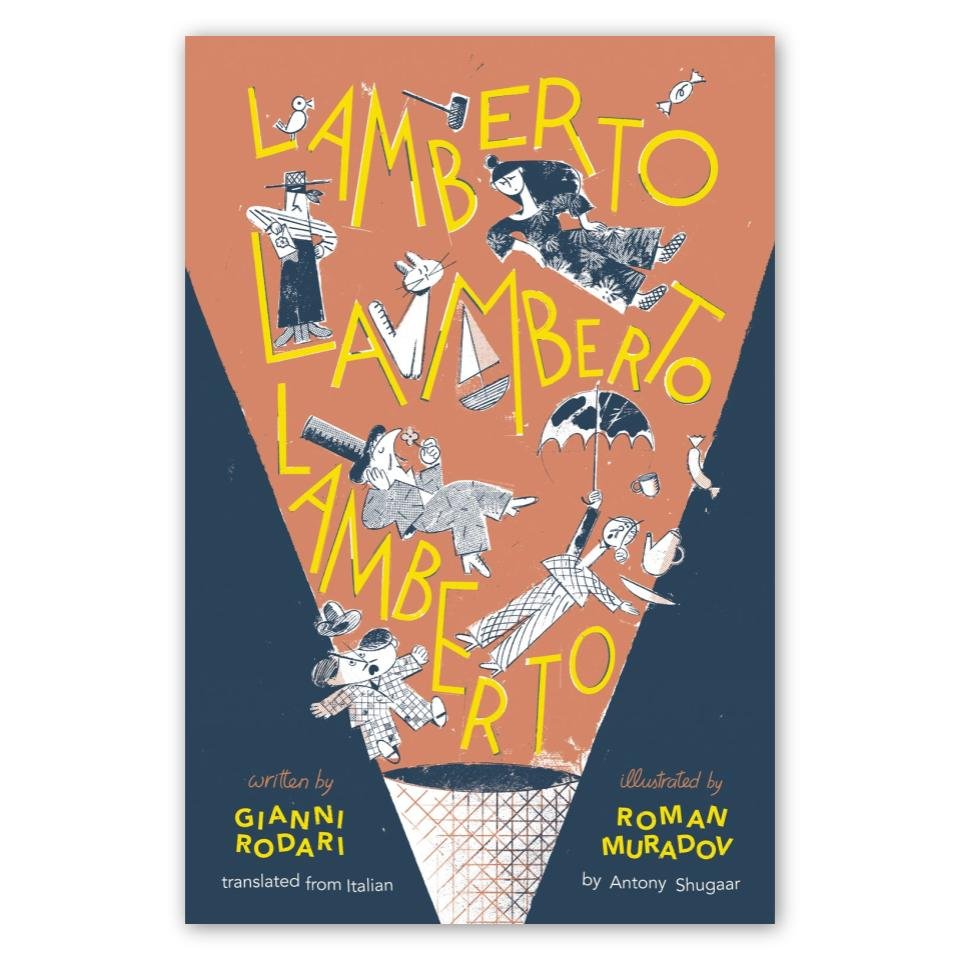
Gianni Rodari: Lamberto Lamberto Lamberto (2011, Melville House) No rating

Jacobin's recurring "this book/film is socialist and therefore good" feature has almost never led me to something I enjoyed, but Rodari's Telephone Tales was a rare exception. Both I and certain children I know liked that book a lot, especially the more gleefully silly entries (like the story of the palazzo made of ice cream, or the one in which the stuffy town of Busto Arsizio creates a building full of things for its rowdy children to smash, and then everybody has a grand old time). So I looked for other Rodari to try and found this, also translated by Anthony Shugaar.

It's an extremely strange extended "fairy tale," where the chaos and whimsy occasionally become grotesque and threatening. The best part is the surprise ending, which is much more in the spirit of the Telephone Tales than what comes before. Shugaar's introduction says the villains stand …

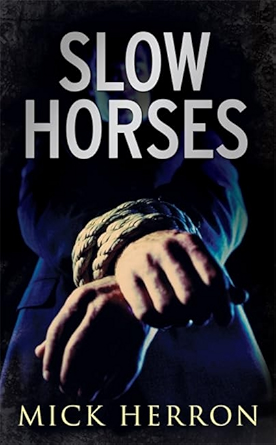
finished reading Slow Horses by Mick Herron (Slough House, #1)

Mick Herron: Slow Horses (Paperback, 2020, Soho Crime)

Welcome to the thrilling and unnervingly prescient world of the slow horses. This team of …

Sort of ruined this for myself by watching the excellent TV adaptation first. Impossible not to see Gary Oldman every time Jackson Lamb appears, and the plot is (largely) the same. However, it's still very good. The basic idea that the "security services" are a mass of incompetents intriguing against each other by conjuring threats where none exist and then shifting blame for their own inevitable failures remains both pleasing and correct. The writing is moderately literary, but not in an offensive way.

finished reading The Secret Agent by Joseph Conrad (Oxford world's classics)

Joseph Conrad: The Secret Agent (2004, Oxford University Press)

Inspired by an actual attempt in 1894 to blow up London's Greenwich Observatory, here is …

Picked this up when the Victorian and modernist graduate reading groups made it a joint choice...sometime around 2008. Pulled it off the shelf now for obscure reasons. I don't feel like forming an intellectual position about it, except to make the obvious remark that London is clearly "one of the dark places of the earth" here.

Karel Čapek, Karel Čapek: R.U.R. (Rossum's universal robots) (2004, Penguin Books)

Written in 1920, premiered in Prague in 1921, and first performed in New York in …

Bought this to consider it for teaching, shelved it unread, picked it out more or less at random because the volume was easy to carry on a trip. One always likes to go back to the source, even if one doesn't actually believe in sources. There are robots. They are workers. They rebel against exploitation. They eventually reproduce humanity.

At least in this translation, it's a pretty unexciting play. It drips with misogyny towards its single female character (duplicated in the third act by a robot). Held up against, say, Lang's Metropolis (only 6 years later) it seems thin and timid, even if it does stage the utter annihilation of humanity. But even that was certainly already done to death (ha ha) by Wells. I don't know a thing about Czech literature or the Czech stage, though, so my judgments may be Anglocentric. Anyway I won't teach it in …

finished reading Black no more by George Samuel Schuyler (The Northeastern library of Black literature)

George Samuel Schuyler: Black no more (1989, Northeastern University Press)

What would happen to the race problem in America if black people turned white? Would …

Actually I read the Project Gutenberg transcription of a reprint of the first edition. This has been on my queue for a long time because of its reputation as a send-up of identity politics avant la lettre, which I thought would be fun to read, back before the backlash had brought us the likely end of civilization. In the meantime it’s become somewhat research-related, since I learned from Brooks Hefner’s book Black Pulp that Schuyler was a crucial figure in black newspaper fiction. Anyway, this novel is more of a Menckenian highbrow satire than anything else. Highly readable and very funny in parts—though, speaking of the great backlash, the spoof of presidential election politics is very, very close to home in 2025. Schuyler understood quite clearly the dynamics of the party system and the opportunities it offers to ideological entrepreneurs of any race who know how to exploit racism and …

Ann Leckie: Translation State (2023, Orbit)

The mystery of a missing translator sets three lives on a collision course that will …

Very enjoyable, in the mode of an episodic addition to the Ancillary trilogy. Wears its Star Trek heart on its sleeve (DS9 I guess, more than TNG as in the earlier sequels to Ancillary Justice). As SF it has two very imaginative twists: in one case a literal twisting of space, in the other a metaphorically twisted (and gory) variation on personhood that would do Derek Parfit proud. Otherwise it’s fluffy and good-natured, with a lot of nice-guy characters. And at least four genders, but no biggie.